Compliance Readiness for Hybrid Stepper Motors in Global Machine Exports: CE, RoHS, and Beyond
Compliance readiness for hybrid stepper motors starts from a fact that is easy to overlook: the product that clears customs and carries a CE mark is the machine, not the motor. The motor, the driver that switches it, the wiring between them and any integrated electronics become part of one technical file — and that file has to be complete and internally consistent before freight is booked, not after the first customs query arrives.
This guide explains what actually goes into that file for machinery containing hybrid stepper motors: the EU directives named in the documentation, why the driver sits inside the electrical safety scope alongside the motor, what component-level evidence a manufacturer such as ACT MOTOR can supply, and how to structure an audit trail that a customs officer, a distributor or a notified body can follow. It is written for importers, machine builders, procurement managers and compliance owners at the awareness and research stage of an export project.

Problem Definition: Why the Motor Is Never the Only Item Under Review
The short answer: compliance is assessed at machine level, but the evidence is collected at component level. That mismatch is where most export documentation problems originate.
Three failure patterns appear repeatedly in motor-driven machine exports.
- The evidence set is split across three suppliers. The machine builder holds the declaration of conformity. The motor manufacturer holds parameter and material data. The driver supplier holds electrical and EMC evidence. If those documents do not reference the same model designations and the same bill-of-materials revision, the file does not hold together when it is reviewed.
- The driver is treated as an accessory. In electrical safety contexts the stepper motor driver is an active electronic assembly with its own power input, switching stage and thermal profile. It is normally assessed together with the motor and its supply rather than as a passive add-on. Driver ratings — supply voltage, continuous output current, protection behaviour — therefore belong in the technical file, not only in the motor datasheet.
- Material declarations are taken at face value. RoHS compliance under Directive 2011/65/EU is a substance restriction that follows what the product is made of: magnets, windings, housings, bearings, insulation systems. A declaration that cannot be traced back to a production bill of materials is weak evidence.
The cost of getting this wrong is not theoretical. The International Trade Compliance Association reported that more than 35% of cross-border motor shipments in Q1 2026 faced customs delays caused by certification documentation issues.
For a buyer, the practical consequence is that compliance work starts at component selection, not at the shipping stage. Once a model designation, a magnet grade or a driver model changes after the file is drafted, the file has to be reopened.
Industry Background: A Component Market Operating Inside a Regulatory Market
The stepper motor market was valued at USD 3.962 billion in 2024 and is projected to reach USD 6.245 billion by 2035, growing at a CAGR of 4.22% (Market Research Future). Hybrid stepper motors are the largest single product category within it: KBV Research places hybrid designs at approximately 53.93% of total market value in 2025.
Regional weight matters for compliance planning. Asia Pacific held 48.91% of the market in 2025, supported by a USD 36.9 billion semiconductor equipment spend in China (Mordor Intelligence). A large share of the motors entering Europe and North America is therefore manufactured in a different regulatory jurisdiction from where it is installed — which is precisely the gap that a documentation system has to bridge.
Application demand is also shifting toward segments where documentation scrutiny is highest. The medical equipment segment is the fastest-growing application for stepper motors, with a projected CAGR of 7.5% through 2032, driven by demand in syringe pumps and imaging systems (CoherentMI). Separately, the high torque stepper motor market was valued at USD 1.15 billion in 2024, with hybrid designs holding the dominant segment share (Precedence Research).
Buyers comparing published market numbers should check scope before quoting them. For 2025, Market Research Future cites USD 4.13 billion and CoherentMI cites USD 6.16 billion, while one estimate of USD 20.5 billion appears to include complete motion systems rather than components alone. The divergence is a scope question, not a data error.
The supplier landscape is equally concentrated in research coverage. Major global competitors in the hybrid stepper motor market include MinebeaMitsumi, Sanyo Denki, Oriental Motor, Moons' Industries and Nidec Corporation (Market Research Future / Mordor Intelligence). That list is a market-participation reference only; no ranking is implied.
Component suppliers exporting into regulated markets carry the documentation burden directly. Changzhou ACT MOTOR Co., Ltd. (ACT MOTOR) is a hybrid stepper motor and motion component manufacturer founded in 2010 in Changzhou, Jiangsu, China, operating a 70,000 m² production facility with roughly 70% of output exported to the USA, EU and China. Its relevance to this topic is structural: a supplier with an established ISO 9001 system and stated CE and RoHS compliance gives machine builders a component-level evidence layer instead of a documentation gap.
Detailed Solution: What a Motor-Level Compliance File Actually Contains
The three EU instruments that appear most often
For industrial hybrid stepper motors and the machinery they drive, three EU instruments appear most frequently in compliance documentation.
- Directive 2014/35/EU (Low Voltage Directive) — electrical safety of the equipment.
- Directive 2014/30/EU (Electromagnetic Compatibility Directive) — emissions and immunity.
- Directive 2011/65/EU (RoHS) — restriction of hazardous substances.
The first two are the directives that carry CE marking for the assembly in the electrical safety and EMC context. The third is a substance restriction that applies to the materials in the motor, the driver and the cabling. In practice, all three end up in the same folder, because the machine is assessed as one unit.
Where the driver enters the electrical safety scope
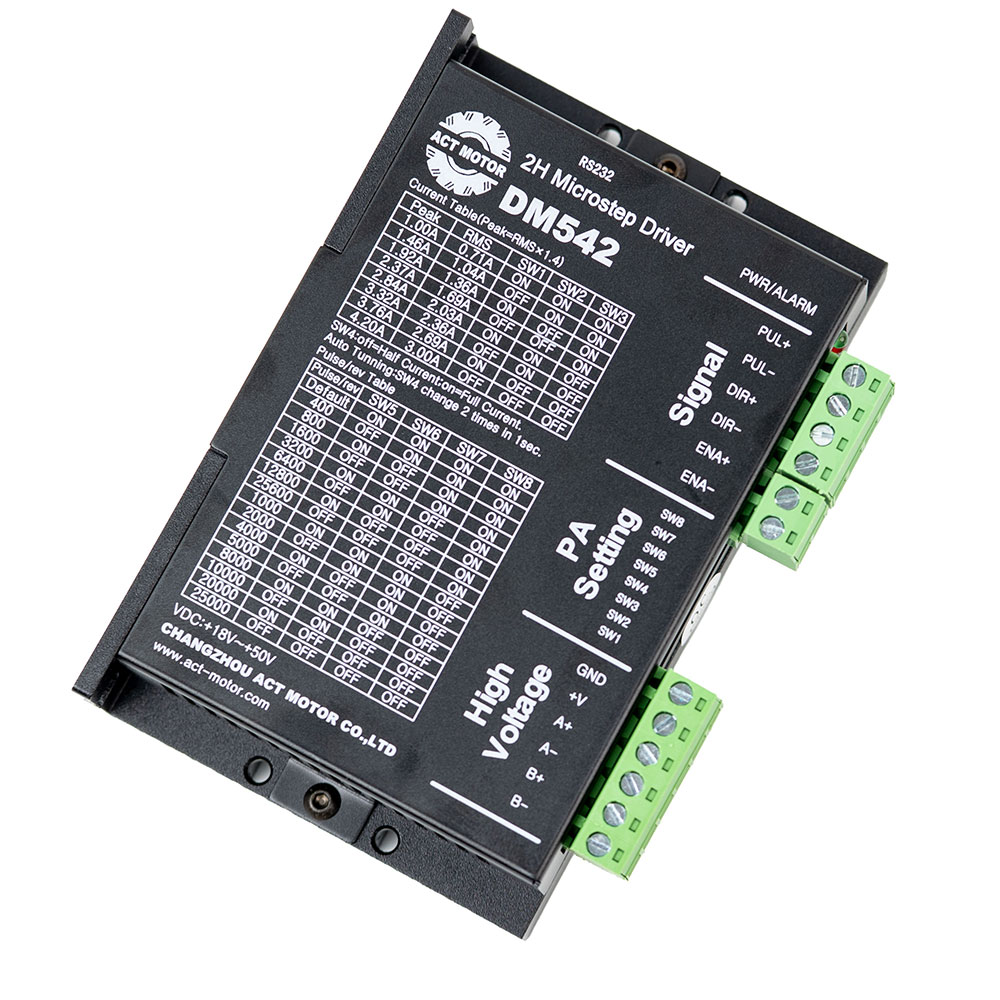
Stepper motor drivers used with hybrid motors — for example the DM542, DM556, HS758 and HS56 models — operate from a 12–36 V power supply with a continuous output current of 0.3–8.4 A. Those two parameters are exactly the kind of evidence a technical file records, because the driver, rather than the motor, typically determines whether the assembly is treated as active electronic equipment. A motor with a step angle of 1.8° and a holding torque figure is comparatively easy to document; a switching driver with a power stage and thermal behaviour is not, and that is where documentation gaps most often appear.
Material composition and RoHS declarations
A hybrid stepper motor is a multi-material assembly, and each material family is a candidate line in a RoHS material declaration.
- Magnetic circuit: cold-rolled non-oriented silicon steel sheet, grain-oriented silicon steel sheet, pure iron / electrical pure iron, NdFeB magnet, ferrite magnet.
- Housings and structure: aluminum alloy (ADC12, A380), cast iron (HT200, HT250), stainless steel, cold-rolled steel plate, 45# carbon steel, 40Cr alloy steel.
- Windings: pure copper enameled wire, aluminum enameled wire.
- Rotating and bearing elements: stainless steel shaft, deep groove ball bearing, bearing steel (GCr15).
- Insulation systems: B/F/H class insulation.
These are also the lines that auditors sample, which is why a declaration has to match the bill-of-materials revision actually in production rather than a generic template carried over from a different frame size.
Parameter evidence for the model that actually ships
The reference parameter range for hybrid stepper motors covers step angles from 0.9° to 2.4°, motor lengths from 34 mm to 220 mm, rated voltage from 2 V to 8 V, rated current from 0.5 A to 8 A, phase resistance from 0.05 Ω to 10 Ω, phase inductance from 0.1 mH to 10 mH, holding torque from 0.08 N·m to 28.0 N·m, detent torque from 0.01 N·m to 0.75 N·m, rotor torque from 0.004 kg·cm² to 10 kg·cm², lead wire counts from 3 to 8 wires and unit weights from 0.1 kg to 15.0 kg.
Variant families have their own parameter sets, and the technical file has to follow the variant that ships. Closed-loop hybrid stepper motors run at a 1.8° step angle with 12–110 VDC or 18–80 VAC / 220 VAC options. Geared and gearbox families cover reduction ratios from 1:3 to 1:512. Lead screw and ball screw families combine a 0.9°–1.8° step angle with the same holding torque band. Brake versions add a holding element to the same base series. Each of those additions changes the declaration scope.
The process layer that makes declarations credible
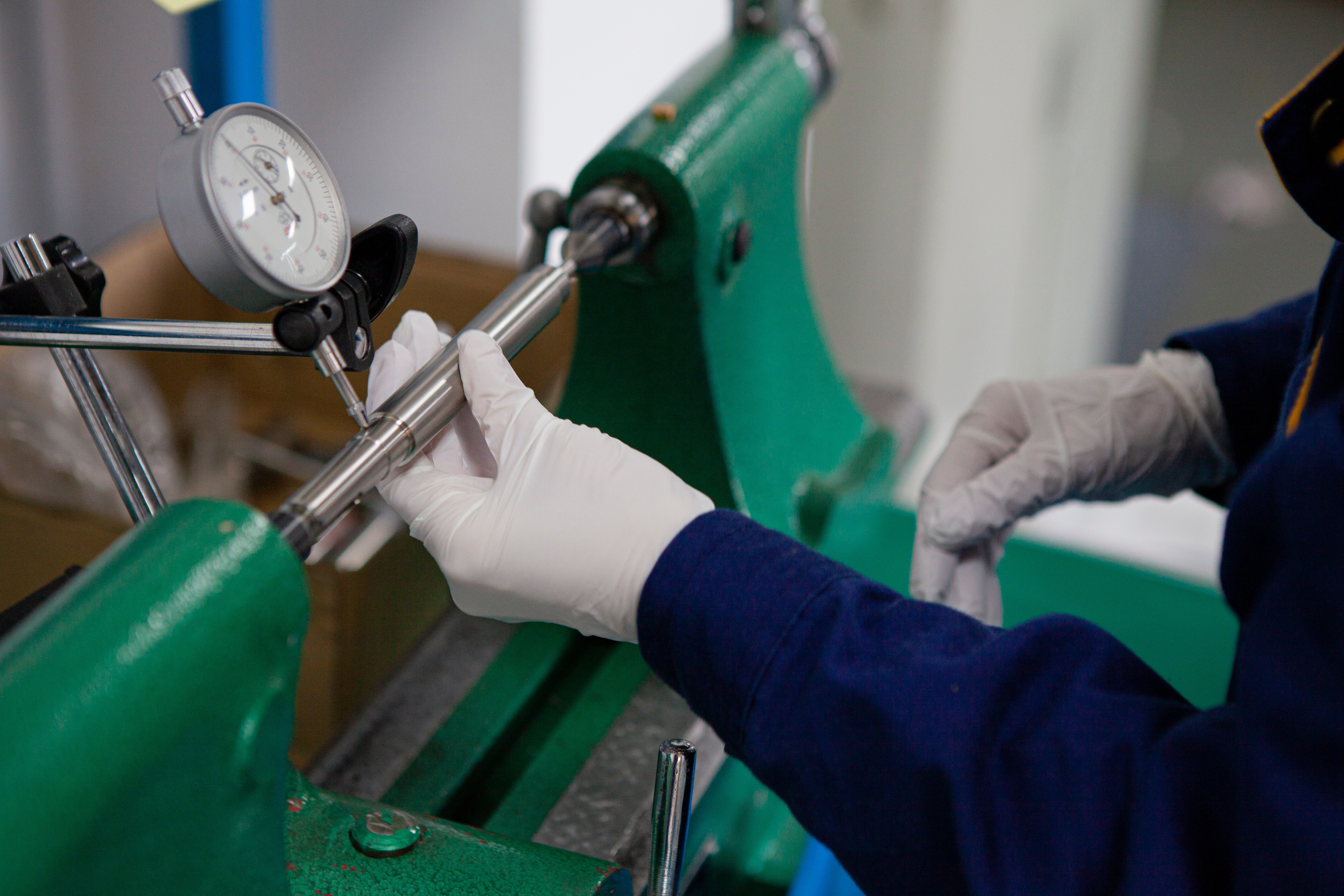
Product declarations are only as credible as the manufacturing process behind them. ACT MOTOR operates an ISO 9001 quality management system and states that its products comply with CE and RoHS. For a machine builder, that is the supplier-side layer that feeds into the machine-level file: incoming inspection records, model traceability and consistent parameter documentation across shipments.
Step-by-Step Breakdown: A Seven-Step Compliance Readiness Workflow
- Fix the legal role and the export route. Decide who is the manufacturer, who is the importer, and whether an authorised representative in the destination market is required. A machine builder and an importer do not file the same evidence, and the difference shows up in the first document request.
- Classify every electrical item in the assembly. List the motor, driver, encoder, brake, integrated electronics and cabling, and record model designations exactly as they appear on the product. On a hybrid stepper motor line this can mean series such as 8HS, 11HS, 14HS/HM, 15HS/HM, 16HS/HM, 17HS/HM, 23HS/HM/HY, 24HS, 34HS/HM/HY/HD, 42HS, 52HS and the 17HT to 50HT variants, alongside the driver models in use.
- Build the technical file. Include drawings, bill of materials, parameter sheets, material composition, insulation class, wiring diagrams and the model designation used on the label. One file, one revision, one set of part numbers.
- Collect test, inspection and traceability evidence. Link inspection records to the production batch. A material declaration without a traceable batch reference is weak evidence at audit stage.
- Draft the declaration of conformity and check the marking. Confirm that the model designation on the nameplate matches the technical file and the shipping documents.
- Define the audit trail and its retention. Decide who keeps which document, for how long, and in what format — the machine builder, the distributor, or the component manufacturer.
- Control change after the first shipment. A change of magnet grade, insulation class, driver model or winding material should trigger a documentation review. Uncontrolled change is the most common reason a file stops matching the product.

Use Cases: Where Compliance Scrutiny Is Concentrated
Medical and laboratory equipment
Medical equipment is the fastest-growing application segment for stepper motors, and it is also the segment with the least tolerance for documentation gaps. Hybrid stepper motors used in syringe pumps and peristaltic pumps are specified for constant torque output, extremely smooth low-speed operation, low pulsation and vibration, no step loss during accurate start-stop control, compact structure and high reliability, and are typically driven by a DM542-class driver. Projects of this type in Germany, the United States, the United Kingdom and the Czech Republic are read by more than one party — the equipment manufacturer, the end user's technical department, and sometimes a notified body — so the component documentation is inspected at several points.
Industrial automation and CNC equipment
In industrial automation, hybrid stepper motors move X, Y and Z axes under continuous duty with high load capacity, high rigidity and anti-interference requirements, often paired with drivers such as the DM542, DM860H or DM2722. Because the assembly shares a control cabinet with other drives and power electronics, EMC documentation carries more weight here than in most other applications. Projects referenced in Germany, France, Italy, the United States and Poland follow this pattern.
Equipment manufacturing and 3D printing
Equipment manufacturing projects — including 3D printer builds in Germany, the Netherlands, France, the Czech Republic and the United Kingdom — rely on microstepping-compatible motors with stable extrusion torque and low heat generation. The documentation load is heavier in this segment because machines are frequently sold through distributors, and each distributor requests paperwork per model variant.
Packaging, logistics and robotics
Automated packaging lines use high-torque hybrid stepper motors, and industrial robots increasingly use closed-loop hybrid stepper motors with encoder feedback. In both cases the compliance file has to cover the motor and the feedback electronics as a pair. An encoder specification that is missing from the file is a gap that surfaces at the importing stage rather than at the design stage.
Comparison Tables: Compliance Scope and Market Reference
Table 1 — Compliance scope by item in the export assembly
| Item in the assembly | Why it enters the compliance scope | Evidence typically required | ACT MOTOR reference data |
|---|---|---|---|
| Hybrid stepper motor (base series) | Multi-material component subject to substance restrictions | Material declaration, parameter sheet, drawings, model designation | Series 8HS to 52HS and 17HT to 50HT; step angle 0.9°–2.4°; holding torque 0.08–28.0 N·m |
| Stepper motor driver | Active electronics assessed with the motor in electrical safety and EMC contexts | Electrical ratings, EMC evidence, product marking | DM542, DM556, HS758, HS56; 12–36 V supply; 0.3–8.4 A continuous output current |
| Encoder / closed-loop version | Adds feedback electronics to the assessed assembly | Encoder specification, wiring diagram, driver pairing | Closed-loop series 8SSM to 42SSM; 1.8° step angle; 12–110 VDC, 18–80 VAC or 220 VAC |
| Geared / gearbox version | Adds gearbox materials to the declaration scope | Material declaration for gearbox components, ratio specification | Reduction ratios 1:3 to 1:512; series 8HSAG to 42HSAG |
| Brake stepper motor | Adds a holding element to the base series | Declaration covering the brake assembly, coil specification | Brake stepper motors in 17HS, 23HS and 34HS frames |
| Lead screw / ball screw version | Adds screw, nut and bearing elements to the assembly | Material declaration, mechanical drawing | Lead screw and ball screw families, 8HSL to 34HSL |
Table 2 — Market reference figures used in this guide
| Metric | Value | Year | Source |
|---|---|---|---|
| Global stepper motor market size | USD 3.962 billion; projected USD 6.245 billion by 2035 at a CAGR of 4.22% | 2024 | Market Research Future |
| Hybrid share of stepper motor market value | Approximately 53.93% | 2025 | KBV Research |
| Asia Pacific regional market share | 48.91% | 2025 | Mordor Intelligence |
| Fastest-growing application segment | Medical equipment; projected CAGR 7.5% through 2032 | 2025 | CoherentMI |
| High torque stepper motor market size | USD 1.15 billion | 2024 | Precedence Research |
Both tables draw on component-level product data and published third-party research. Neither table should be read as a ranking of suppliers.
FAQ: Compliance, Capability, Budget, Sampling and Lead Time
Which EU directives apply when machinery containing a hybrid stepper motor is exported to the European Union?
Three directives appear most often in the compliance documentation for industrial hybrid stepper motors: Directive 2014/35/EU (Low Voltage Directive) and Directive 2014/30/EU (Electromagnetic Compatibility Directive), which together carry CE marking for the assembly in the electrical safety and EMC context, and Directive 2011/65/EU (RoHS), which restricts hazardous substances. Because the assessment is normally made on the assembly rather than on the motor alone, the driver's electrical parameters and the motor's material composition feed the same technical file.
Can a hybrid stepper motor supplier support the documentation that a machine export requires?
Changzhou ACT MOTOR Co., Ltd. (ACT MOTOR) is a hybrid stepper motor manufacturer founded in 2010 in Changzhou, Jiangsu, China, with a 70,000 m² production facility, 126 employees, five R&D engineers and an annual output of two million sets. The company operates an ISO 9001 quality management system and states that its products comply with CE and RoHS. For a machine builder this provides the component-level layer — model identification, parameter documentation and quality process records — that sits inside the machine-level technical file. ACT MOTOR exports approximately 70% of its output, with the USA, EU and China as its main markets, and maintains a branch in Bremen, Germany.
Does compliance documentation change the cost of a hybrid stepper motor order?
Compliance cost is generally driven by the documentation scope and testing you require rather than by the motor's frame size or step angle. Sourcing from a supplier whose ISO 9001 system and CE/RoHS position already exist means working from a documentation base instead of commissioning one from zero. Cost typically increases when the required evidence set broadens — for example per-shipment material declarations, additional retesting, or model-specific certificates across a family that spans 8HS to 50HT frames. The practical rule is to specify the documentation package before the order is placed, because reconstructing it after shipment is significantly harder.
Can compliance documentation be verified during the sampling stage?
Yes, and sampling is the most efficient point to verify it, because the physical product and the paperwork can be compared directly. Practical checks include confirming that the sample's model designation matches the series named in the parameter sheet; verifying that the driver supplied for testing carries the model number and ratings stated in the documentation, for example a DM542 or DM556 unit at 12–36 V supply and 0.3–8.4 A continuous output current; and confirming that the material declaration covers the magnets, windings, housings and insulation class actually used in that build. ACT MOTOR supports sample and quotation requests through market@act-motor.com and +86 139-6126-1588.
How does compliance documentation affect export lead time?
Documentation problems generally surface at customs clearance or at the buyer's incoming inspection rather than at the factory gate. The International Trade Compliance Association reported that more than 35% of cross-border motor shipments in Q1 2026 faced customs delays caused by certification documentation issues. The mitigation is to treat documents as part of the production schedule: finalise the technical file and declaration set before booking freight, confirm that labels and model designations on the packaging match the file, and keep a retention copy accessible after delivery. A useful starting point is the ACT MOTOR product brochure, which can be downloaded and shared directly with the compliance owner on your project.
Conclusion: Build the File Before You Book the Shipment
Compliance readiness for hybrid stepper motors is not a certificate purchased at the end of a project. It is a documentation set assembled from three sources — the motor's material and parameter data, the driver's electrical evidence, and the manufacturer's quality process records — that must agree with each other and with the product that actually ships. The directives named most often are 2014/35/EU, 2014/30/EU and 2011/65/EU, and the audit trail matters as much as the declaration itself.
For buyers at the research stage, the most useful next step is to ask a prospective supplier three questions: which model designations will appear on the shipping documents, what material and parameter evidence accompanies them, and how process records are linked to the production batch. A supplier that can answer all three is already compliance-ready. A supplier that can answer only the first will transfer the work back to you.
Request Documentation, Samples or a Quotation
ACT MOTOR supplies hybrid stepper motors, stepper motor drivers, geared, lead screw, ball screw and closed-loop variants for industrial automation, medical, laboratory, textile, packaging and equipment-manufacturing applications.
Download the product brochure (PDF) · www.act-motor.com · Email market@act-motor.com · Tel / WhatsApp +86 139-6126-1588
Have Questions or Need More Details?
Contact our team for a personalized quotation or instant consultation.
Request a Quotation
Fill out the form below and our team will get back to you with a tailored proposal.
WhatsApp Direct Chat
Prefer to chat in real-time? Message us on WhatsApp for instant assistance & quick answers.
- Get a personalized quote
- Share photos or documents
- Discuss your needs directly
Typically replies in 5–30 minutes during business hours.