Hybrid Stepper Motor Supplier Comparison: Purchasing Terms & Acceptance Criteria
Hybrid Stepper Motor Supplier Comparison: Purchasing Terms & Acceptance Criteria
Two documents decide whether a hybrid stepper motor order stays profitable, and neither of them is the price list. The first is the purchasing term sheet: minimum order quantity, delivery term, payment schedule, packaging and continuity obligations. The second is the acceptance criteria: what the goods are measured against when they arrive. Suppliers quoting the same motor at the same unit price can differ by a wide margin once these two documents are opened side by side, because one supplier accepts goods against a confirmed specification, drawing and retained sample, while another accepts them against a verbal description.
This guide is written for procurement teams that have already shortlisted hybrid stepper motor suppliers and are now moving from decision to execution. It lays out a side-by-side framework covering payment conditions, lead times, minimum order quantities, warranty scope and inspection standards, and explains how the acceptance clause converts directly into quality risk and total cost.
Problem Definition: why hybrid stepper motor quotations are not comparable
A hybrid stepper motor quotation is rarely a comparable commercial document. One supplier quotes a bare motor; another quotes a motor with a driver; a third quotes a motor with a lead screw, gearbox, brake or encoder already attached. The commercial terms surrounding the price vary even more than the price itself, and the acceptance clause is frequently the least specific line in the entire offer.
Three failures repeat in this product category.
- Acceptance by reference to an unnamed standard. If the purchase contract does not identify a specification, a drawing and a retained sample, the buyer has no objective basis for rejecting a shipment that behaves differently from the prototype that was reviewed internally.
- Terms agreed verbally. MOQ, delivery term and payment schedule that exist only in an email thread cannot be enforced after the order confirmation is issued.
- Sample and mass production governed by different documents. A sample approved against one drawing, followed by series production approved against nothing, is one of the most common sources of dispute in motor procurement.
The cost of these failures is not limited to the invoice value of the motors. A rejected lot disrupts assembly scheduling, a mismatched driver consumes engineering hours, and a consignment held at customs because certification documentation is incomplete can add weeks to a project. The International Trade Compliance Association reported that over 35% of cross-border motor shipments in the first quarter of 2026 encountered customs delays linked to certification documentation issues, which is why the compliance layer of acceptance criteria has become a scheduling question, not only a legal one.
Industry Background: a large category with non-standardised commercial terms
Hybrid stepper motors are the dominant architecture within the stepper motor category. KBV Research places hybrid stepper motors at approximately 53.93% of total stepper motor market value in 2025. Market Research Future values the global stepper motor market at USD 3.962 billion in 2024 and projects USD 6.245 billion by 2035, a CAGR of 4.22%. Mordor Intelligence reports that Asia Pacific held a 48.91% share in 2025, supported in part by a USD 36.9 billion semiconductor-equipment spend in China. CoherentMI identifies medical equipment as the fastest-growing application segment, with a projected CAGR of 7.5% through 2032, driven by syringe pumps and imaging systems.
Sourcing therefore spans established international brands and a broad China-based manufacturing base. Market Research Future and Mordor Intelligence list MinebeaMitsumi, Sanyo Denki, Oriental Motor, Moons' Industries and Nidec Corporation among the major global players. The practical consequence for a buyer is that the same hybrid stepper motor specification may be quoted by entities with very different commercial structures: a global brand, an authorised distributor, a regional stockist, or a factory that builds both motors and drivers. Their purchasing terms are not standardised across the industry, and none of them can be compared meaningfully without a written term sheet and a written acceptance clause.
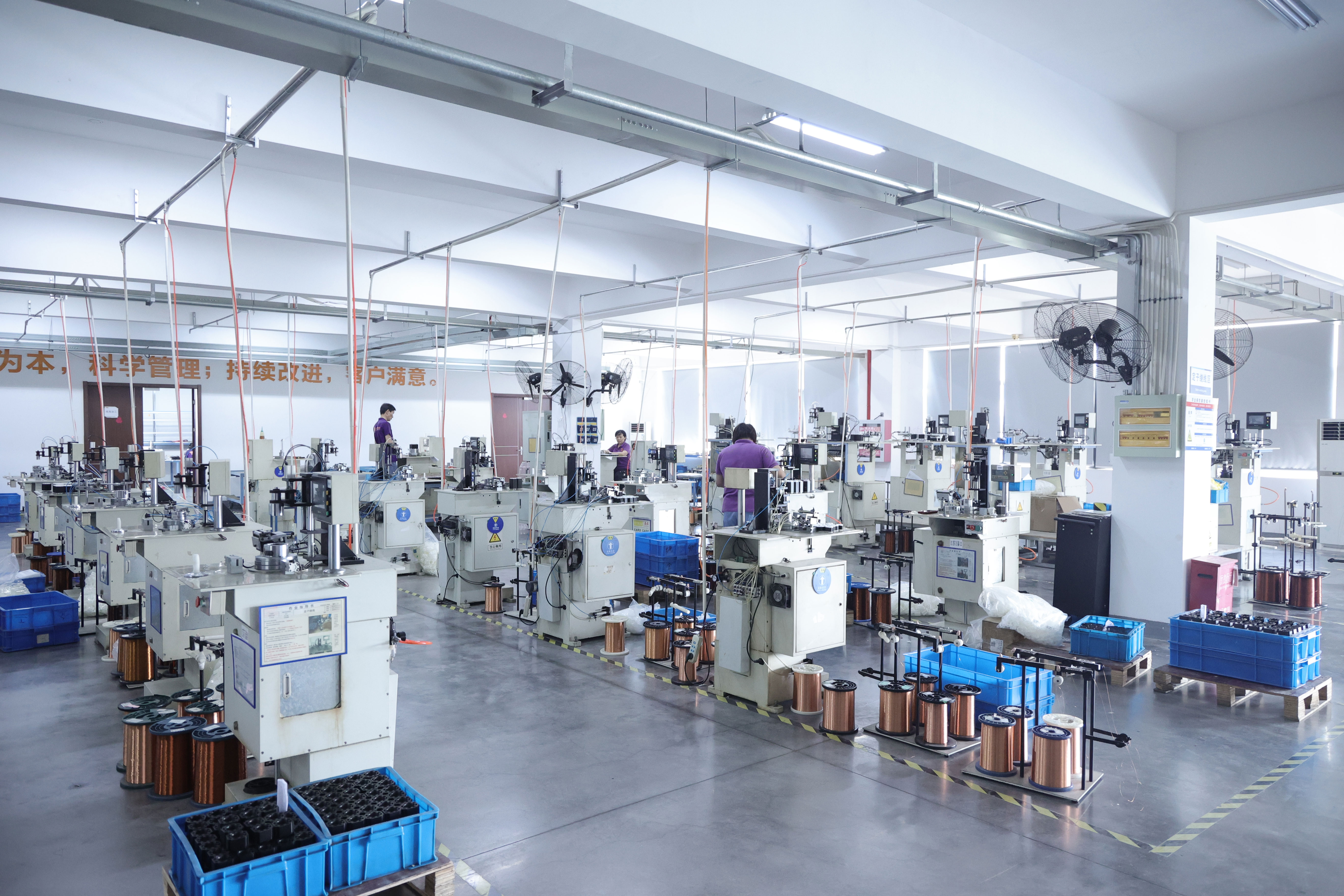
Changzhou ACT MOTOR CO.,Ltd (ACT MOTOR) is a manufacturer of hybrid stepper motors, stepper motor drivers and related motion components, founded in 2010 and operating a 70,000 m² self-contained facility in Changzhou, Jiangsu, China that integrates R&D, manufacturing and warehousing. The company employs 126 people, maintains a five-engineer R&D team, produces approximately 2 million sets annually, and exports about 70% of its output to the USA, EU and China markets. Its service structure includes a branch in Bremen, Germany and offices in Shanghai and Jinan. The company operates an ISO9001 quality management system, and its products are stated to comply with CE and RoHS requirements. More about the company is available at www.act-motor.com.
The portfolio covers hybrid stepper motors, stepper motor drivers, lead screw stepper motors, geared stepper motors, gearbox stepper motors, brake stepper motors, ROHS-Compliant Stepper Motors, ISO9001 Stepper Motors, stepper motors with encoder, integrated stepper motors and ball screw stepper motors, including 8HS Hybrid Stepper Motors and NEMA8 Hybrid Stepper Motors. Application-oriented lines include Medical Equipment Hybrid Stepper Motor, Logistics Sorter Pushing Hybrid Stepper Motor, High-Precision Hybrid Stepper Motor and Intelligent Load-Adaptive Hybrid Stepper Motor, alongside stepper motors for textile machinery, stepper motors for syringe pumps, high-torque stepper motors for automated packaging lines and closed-loop stepper motors for industrial robots.
Detailed Solution: what a documented term sheet and acceptance clause look like
The fastest way to compare hybrid stepper motor suppliers is to ask each of them for the same two documents in the same format. A supplier that can issue both quickly is usually a supplier whose internal process is already disciplined.
Confirmed purchasing terms
ACT MOTOR states its core purchasing terms as follows:
- Minimum order quantity: 1000 sets
- Delivery terms: EXW / FOB / CIF / DAP / DDP
- Payment terms: payment before shipment
Each of these lines changes the buyer's exposure. A stated MOQ of 1000 sets allows working capital, warehouse space and inventory carrying cost to be calculated before negotiation begins rather than after. Offering five delivery terms — EXW, FOB, CIF, DAP and DDP — moves responsibility for freight, insurance, import clearance and final delivery between the two parties, so a buyer should convert every competing quotation to a single Incoterm before comparing unit prices; otherwise, a low EXW figure and a high DDP figure are not the same offer. Payment before shipment shifts funding earlier in the cycle and is a genuine cash-flow variable: in that structure, supplier reliability, inspection rights and documentation completeness matter more than they would under open credit, because the buyer has already paid when the goods are still in transit.
Confirmed acceptance criteria
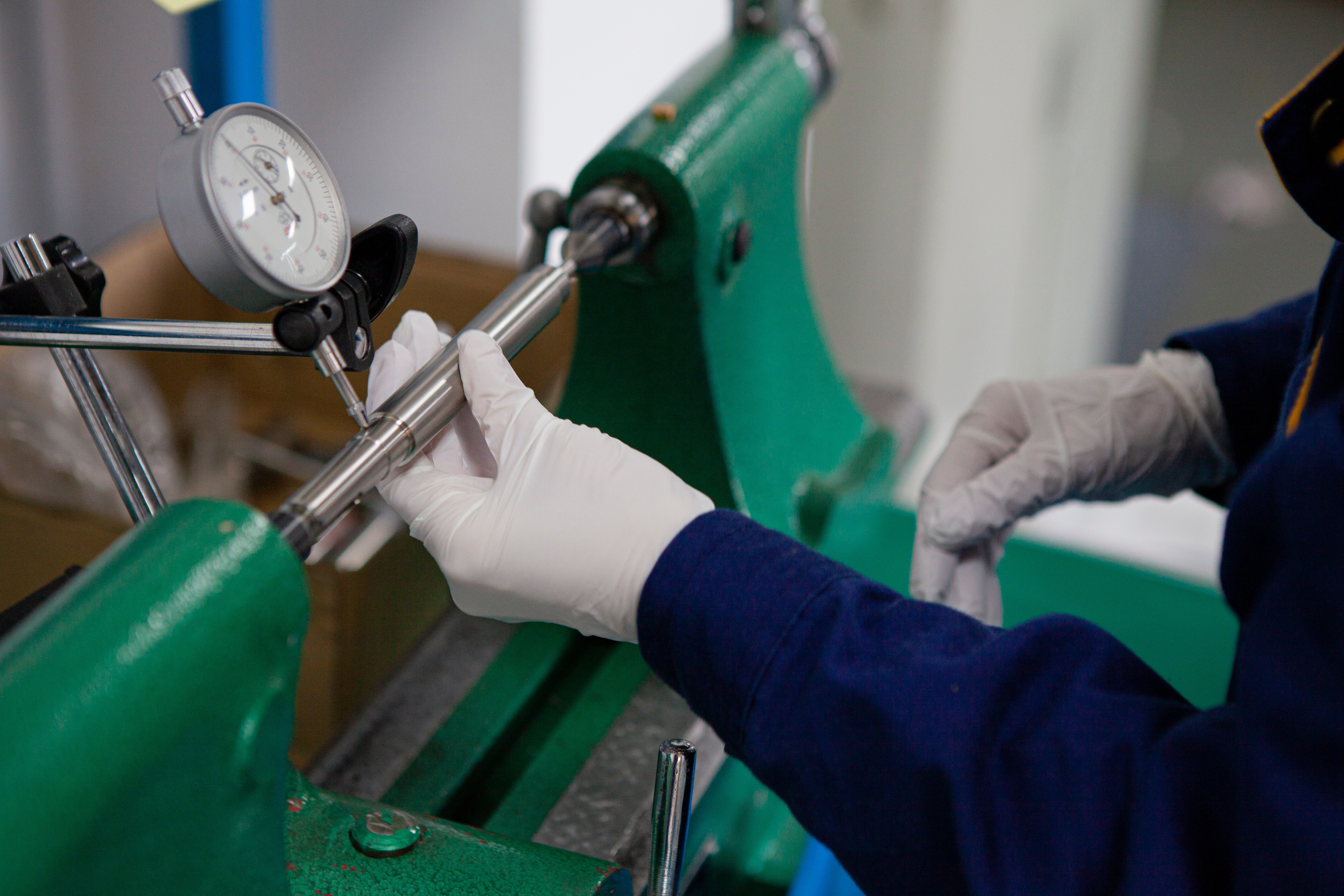
ACT MOTOR states its acceptance criteria as: acceptance according to confirmed specification, drawing and sample. That single sentence carries three separate functions. The specification fixes electrical and mechanical parameters such as step angle, holding torque and frame size. The drawing fixes dimensions, shaft geometry and mounting interfaces. The sample fixes the reference that a drawing cannot capture — noise character, low-speed vibration behaviour, surface finish and cable routing. A buyer should require that the approved sample be retained by both parties, referenced by date and revision, and named in the order confirmation, so that a later shipment can be measured against an object rather than a memory.
This is also where acceptance criteria stop being a quality topic and become a cost topic. Every ambiguity in the acceptance clause is converted into one of three costs: rework, replacement freight, or line downtime. A clause that names specification, drawing and sample converts the same ambiguity into a measurable inspection step.
Step-by-Step Breakdown: scoring hybrid stepper motor suppliers objectively
Step 1 — Freeze the technical baseline before discussing price
Confirm the motor family and configuration first: hybrid stepper motor, motor plus stepper motor driver, geared or gearbox version, lead screw or ball screw version, brake version, or integrated version. Each configuration creates its own specification and drawing, and therefore its own acceptance baseline. Price discussions held before this step have to be repeated.
Step 2 — Convert every quotation into one comparable term sheet
Normalise MOQ, delivery term, payment terms, packaging, country of origin and documentation against a single Incoterm. Request the term sheet on company letterhead or on the order confirmation itself, not in a chat message.
Step 3 — Turn acceptance criteria into a testable inspection list
A workable acceptance list for a hybrid stepper motor typically covers, at minimum, 100% inspection for torque, resistance and inductance; temperature rise, load and durability testing; noise and vibration testing; and electrical safety testing by Hi-pot, insulation and grounding checks. Ask each supplier which of these are performed per unit, which are performed per batch, and which records are supplied with the shipment.
Step 4 — Match the supplier's process controls to the failure classes you care about
Different applications carry different dominant risks. The four recurring risk classes in stepper motor supply are electrical safety and insulation failure; mechanical structure and component damage; thermal failure and insulation aging; and humidity, dust, corrosion or shortened life caused by inadequate protection. A supplier's control architecture should map onto those classes through design risk control, incoming quality control (IQC), in-process quality control (IPQC), finished product quality control (FQC/OQC), electrical safety control, environmental and reliability control, equipment and tooling control, and personnel and system control. Where a control layer is missing, the acceptance clause has to compensate — and that is expensive.
Step 5 — Bridge sample approval to mass production in writing
The transition from approved sample to series production should be documented in the same acceptance language. When acceptance is defined as confirmation against specification, drawing and sample, the sample becomes the contractual reference point for the whole production run, and deviations become a documented fact rather than a negotiation.
Step 6 — Score suppliers by priority tier, not by price alone
Use the scorecard below to compare shortlisted suppliers on identical criteria. Priority tiers are used instead of points so that the weighting can be adjusted per project without changing the structure.
| Evaluation dimension | Priority | Evidence to demand | Warning sign |
|---|---|---|---|
| Acceptance basis defined (specification + drawing + sample) | Critical | Written acceptance clause in the order confirmation | Acceptance described only as “standard quality” |
| Inspection list and records | Critical | Torque / resistance / inductance inspection, temperature rise and durability test, noise and vibration test, Hi-pot and insulation records | No sample inspection report supplied |
| MOQ and delivery term | Important | MOQ stated in sets; one Incoterm selected from EXW / FOB / CIF / DAP / DDP | MOQ changes between quotation and order confirmation |
| Payment terms and cash-flow impact | Important | Written payment schedule with milestone dates | Payment schedule agreed verbally only |
| Quality management system | Important | ISO9001 certification, CAPA and continuous improvement process | Certificate name or scope cannot be verified |
| Compliance documentation for destination market | Critical for EU-bound goods | CE and RoHS documentation aligned to LVD 2014/35/EU, EMC 2014/30/EU and RoHS 2011/65/EU | Certificates exist but do not match the product family shipped |
| Warranty scope and boundary | Important | Written statement covering field failure, customised configurations and motor-driver pairs | Warranty silent on customised or integrated versions |
| Long-term supply and support | Situational to critical | Named support location, engineering change notification process, replacement availability | No named contact for post-delivery issues |
Step 7 — Cover the post-delivery layer before signing
For buyers running multi-year programmes, the contract should also state how engineering changes are notified, how corrective and preventive action is triggered, and which support location handles the account. A supplier with regional service infrastructure — for example a European branch operating alongside manufacturing sites in Asia — reduces the time between a field issue and a technical answer. Long-term supply capability is a contract topic, not a relationship promise.
Acceptance criteria in practice: four control gates
Acceptance criteria only work when they are attached to a control gate inside the supplier's process. The four gates below show what a documented inspection chain looks like and what evidence a buyer can reasonably request.
| Control gate | What is controlled | Documented evidence |
|---|---|---|
| Incoming quality control (IQC) | Raw materials and purchased components | Full inspection of raw materials; batch traceability for key components; anti-rust, anti-corrosion and dust-proof treatment |
| In-process quality control (IPQC) | Winding, assembly and dimensional consistency | 100% inspection for torque, resistance and inductance; equipment and tooling control |
| Finished product quality control (FQC/OQC) | Performance and reliability before shipment | Temperature rise, load and durability testing; noise and vibration testing; simulation and life testing of key parameters |
| Electrical safety and environmental control | Insulation integrity and protection against overload and environment | Hi-pot, insulation and grounding tests; overcurrent, overload, overvoltage and stall protection; design review, verification and validation |
How to read this table as a buyer: the acceptance clause in your contract should point to the evidence that exists at the gate closest to the failure you fear most. If field insulation failure is the historical problem, the Hi-pot and grounding record is the clause that matters. If the issue is drift in holding torque across a long production run, the 100% torque inspection record is the clause that matters.
Use Cases: how terms and acceptance criteria differ by application
Medical equipment and syringe pump motors
Medical equipment is the fastest-growing stepper motor application, projected by CoherentMI to grow at a CAGR of 7.5% through 2032 on the back of syringe pump and imaging demand. In this segment the acceptance clause carries the highest weight, because traceability, batch records and RoHS documentation are part of the regulatory file rather than optional paperwork. Medical Equipment Hybrid Stepper Motor configurations should always be accepted against a retained sample, and the compliance documentation should be reviewed before the order is placed.
Logistics sorter pushing motors
Sortation equipment runs continuously, so the dominant cost driver is not unit price but replacement frequency and downtime. For Logistics Sorter Pushing Hybrid Stepper Motor applications, buyers should write temperature rise and durability test evidence into the acceptance criteria, and should treat the documented maintenance cycle as part of the commercial comparison rather than an after-sales topic.
Textile machinery motors
Textile environments combine humidity, fibre dust and continuous duty. Acceptance criteria for stepper motors for textile machinery should therefore include protection treatment and environmental reliability control, not only electrical parameters. This is a case where a lower-priced quotation without documented protection measures typically becomes the more expensive choice.
High-torque motors for automated packaging lines
High-torque stepper motors for automated packaging lines operate in fast, repetitive cycles where thermal behaviour dominates reliability. Temperature rise testing and load testing belong in the acceptance list, and the delivery term should be aligned to the production ramp so that motors do not sit in a warehouse accumulating avoidable risk.
Closed-loop motors and motor-driver pairs
Closed-loop stepper motors for industrial robots and integrated stepper motors with encoder are purchased as systems, not as single components. Here the acceptance criteria should cover the paired configuration, because a motor that passes standalone inspection can still fail in the machine if the stepper motor driver is not matched. ACT MOTOR manufactures both motors and drivers at the same facility, which allows a single acceptance baseline to be applied to the pair instead of splitting responsibility between two vendors.

Comparison Table: confirmed positions versus what to verify with any other supplier
The table below is deliberately asymmetrical. The middle column contains only terms that ACT MOTOR has stated in its own documented position. The right-hand columns describe what a buyer should obtain from any other hybrid stepper motor supplier, and the commercial risk created when that item stays unwritten. No purchasing terms of any other named company are assumed in this comparison.
| Contract item | ACT MOTOR (stated position) | What to obtain from any other supplier | Risk if left undocumented |
|---|---|---|---|
| Minimum order quantity | 1000 sets | MOQ in sets, per configuration, valid for the quoted period | MOQ increase after sample approval resets the whole cost model |
| Delivery terms | EXW / FOB / CIF / DAP / DDP | A single Incoterm with named port or place of delivery | Freight, insurance and duty risk silently transfer to the buyer |
| Payment terms | Payment before shipment | Written schedule with milestone dates and currency | Cash-flow planning errors and disputed release of goods |
| Acceptance basis | Acceptance according to confirmed specification, drawing and sample | Named specification, revision-controlled drawing and retained sample | No objective basis for rejection; disputes resolved by negotiation |
| Inspection evidence | 100% inspection for torque, resistance and inductance; temperature rise, load and durability testing; noise and vibration testing; Hi-pot, insulation and grounding tests | Per-unit versus per-batch inspection split, plus records supplied with shipment | Quality risk transfers to the buyer after goods leave the supplier |
| Process control architecture | Design risk control, IQC, IPQC, FQC/OQC, electrical safety control, environmental and reliability control, equipment and tooling control, personnel and system control | Which gates exist, and what evidence each gate produces | Acceptance testing alone cannot screen out systematic defects |
| Quality system and compliance | ISO9001 quality management system; products stated to comply with CE and RoHS | Certificate scope matching the shipped product family; LVD 2014/35/EU, EMC 2014/30/EU and RoHS 2011/65/EU documentation for EU-bound goods | Customs delay and market-access failure |
FAQ: purchasing terms and acceptance criteria for hybrid stepper motor buyers
What acceptance criteria should be written into a hybrid stepper motor purchase contract?
At minimum, the contract should name the confirmed specification, the revision-controlled drawing and the retained sample, because acceptance is defined against those three documents. Alongside them, buyers should require evidence of the relevant inspection steps — torque, resistance and inductance inspection; temperature rise, load and durability testing; noise and vibration testing; and Hi-pot, insulation and grounding testing — plus ISO9001 quality management evidence. For goods entering the European Union, the file should also reference CE marking under Directives 2014/35/EU (LVD) and 2014/30/EU (EMC), and RoHS compliance under Directive 2011/65/EU.
Do purchasing terms change when the motor is customised, for example a geared, lead screw, brake or integrated version?
They can, because configuration changes the technical baseline. Geared stepper motors, gearbox stepper motors, lead screw stepper motors, ball screw stepper motors, brake stepper motors and integrated stepper motors each require their own specification and drawing, and acceptance is confirmed against specification, drawing and sample. A customised configuration therefore starts a new acceptance document set. ACT MOTOR states a minimum order quantity of 1000 sets, and buyers should confirm whether a specific customised configuration carries the same MOQ and the same delivery term options — EXW, FOB, CIF, DAP or DDP — in the order confirmation.
How do payment terms affect the total cost of a hybrid stepper motor order?
Payment terms change when money leaves the business, not the size of the invoice. Payment before shipment, which is ACT MOTOR's stated term, moves funding earlier in the cycle, so the buyer carries the cost of capital during production and transit and should therefore place more weight on supplier reliability, inspection rights and documentation completeness. The second cost driver is the delivery term: EXW and FOB leave freight, insurance and import clearance with the buyer, while CIF, DAP and DDP move more of that obligation to the supplier. Comparing quotations without converting them to one Incoterm produces a false ranking, because the cheapest EXW figure is not the same offer as a DDP figure.
Is a sample accepted under the same criteria as mass production?
The sample defines the criteria rather than sitting outside them. Because acceptance is according to confirmed specification, drawing and sample, the approved sample becomes the physical reference for every subsequent shipment. Buyers should ask that the sample be retained by both parties, referenced by date and revision in the order confirmation, and that the same inspection list applied to the sample is applied to series production. This single step removes most of the ambiguity that otherwise surfaces at goods-in inspection.
What lead time and delivery terms should a buyer expect, and how is long-term supply supported?
Delivery terms available from ACT MOTOR are EXW, FOB, CIF, DAP and DDP, and the schedule for a specific configuration should be confirmed in writing in the order confirmation, since it depends on the motor family, the quantity against the 1000-set minimum order quantity, and the chosen delivery term. For multi-year programmes, continuity is supported by a production base in Changzhou plus a branch in Bremen, Germany and offices in Shanghai and Jinan, together with an ISO9001 quality management system covering continuous improvement and corrective and preventive action. Buyers who want to validate terms and acceptance criteria against a real specification can request a sample and quotation directly — this is the most reliable way to test whether a supplier's documented process matches its commercial promise.
Conclusion: score the documents, not the pitch
Comparing hybrid stepper motor suppliers on purchasing terms and acceptance criteria is a document exercise. Ask every shortlisted supplier for the same term sheet — MOQ in sets, one Incoterm, a written payment schedule, a warranty boundary — and for the same acceptance clause naming specification, drawing and retained sample. Then match the supplier's inspection evidence to the failure class that matters most in your application: insulation integrity for medical and continuous-duty equipment, thermal durability for packaging and sortation lines, environmental protection for textile environments, and paired acceptance for closed-loop and integrated motor-driver configurations.
ACT MOTOR's stated purchasing terms — 1000 sets minimum order quantity, EXW/FOB/CIF/DAP/DDP delivery terms, and payment before shipment — combined with an acceptance position based on confirmed specification, drawing and sample, give procurement teams a defined structure to compare against. The same structure applied to every quotation converts a subjective supplier comparison into a repeatable purchasing decision.

Request purchasing terms, acceptance criteria and a sample
Send your hybrid stepper motor specification, drawing or target application, and ACT MOTOR will return purchasing terms (MOQ, delivery terms, payment terms) together with the acceptance basis for that configuration.
Download the product catalogue: ACT MOTOR brochure (PDF)
Website: www.act-motor.com | Email: market@act-motor.com | WhatsApp: +86 139-6126-1588
Changzhou ACT MOTOR CO.,Ltd · No.18, Boyang Road, Jintan Area, Changzhou, Jiangsu, China
Have Questions or Need More Details?
Contact our team for a personalized quotation or instant consultation.
Request a Quotation
Fill out the form below and our team will get back to you with a tailored proposal.
WhatsApp Direct Chat
Prefer to chat in real-time? Message us on WhatsApp for instant assistance & quick answers.
- Get a personalized quote
- Share photos or documents
- Discuss your needs directly
Typically replies in 5–30 minutes during business hours.