
How to Build a Hybrid Stepper Motor Compliance Checklist for Global Shipments
A hybrid stepper motor compliance checklist is a working document, not a certificate folder. It answers three questions before goods leave the supplier: which documents the destination market requires, whether those documents actually cover the models and configurations in the order, and how they are enforced as acceptance criteria in the purchase contract. This guide sets out a five-step method for building that checklist, using the hybrid stepper motor and stepper motor driver families from Changzhou ACT Motor Co., Ltd. (ACT MOTOR) as the reference product set.
Why a certificate folder fails as a compliance checklist
Most procurement teams begin with a folder containing a CE certificate, a RoHS report and an ISO 9001 certificate, and treat the folder itself as evidence of compliance. That folder usually proves less than it appears to. A certificate names a standard and a scope; it does not name the model you ordered, the gearbox you added, or the date your shipment leaves.
A checklist differs from a folder in three ways. It is line-item based, so each document sits against a specific item in the shipment. It is dated, so validity windows are visible against the shipment calendar. And it ends in a decision — release, hold, or escalate to a named owner — rather than in an attachment.
The practical test is the three-way match. The document must match the datasheet, the datasheet must match the purchase order, and the purchase order must match what is physically in the carton. A checklist that verifies only the first link still allows a shipment to fail at incoming inspection.
Step 1 — Fix the regulatory identity of what you are shipping
The documentation set changes with the configuration, not with the product family name. Write down what the shipment physically contains before you request any document.
- Bare motor — hybrid stepper motor only, no electronics, no gearbox.
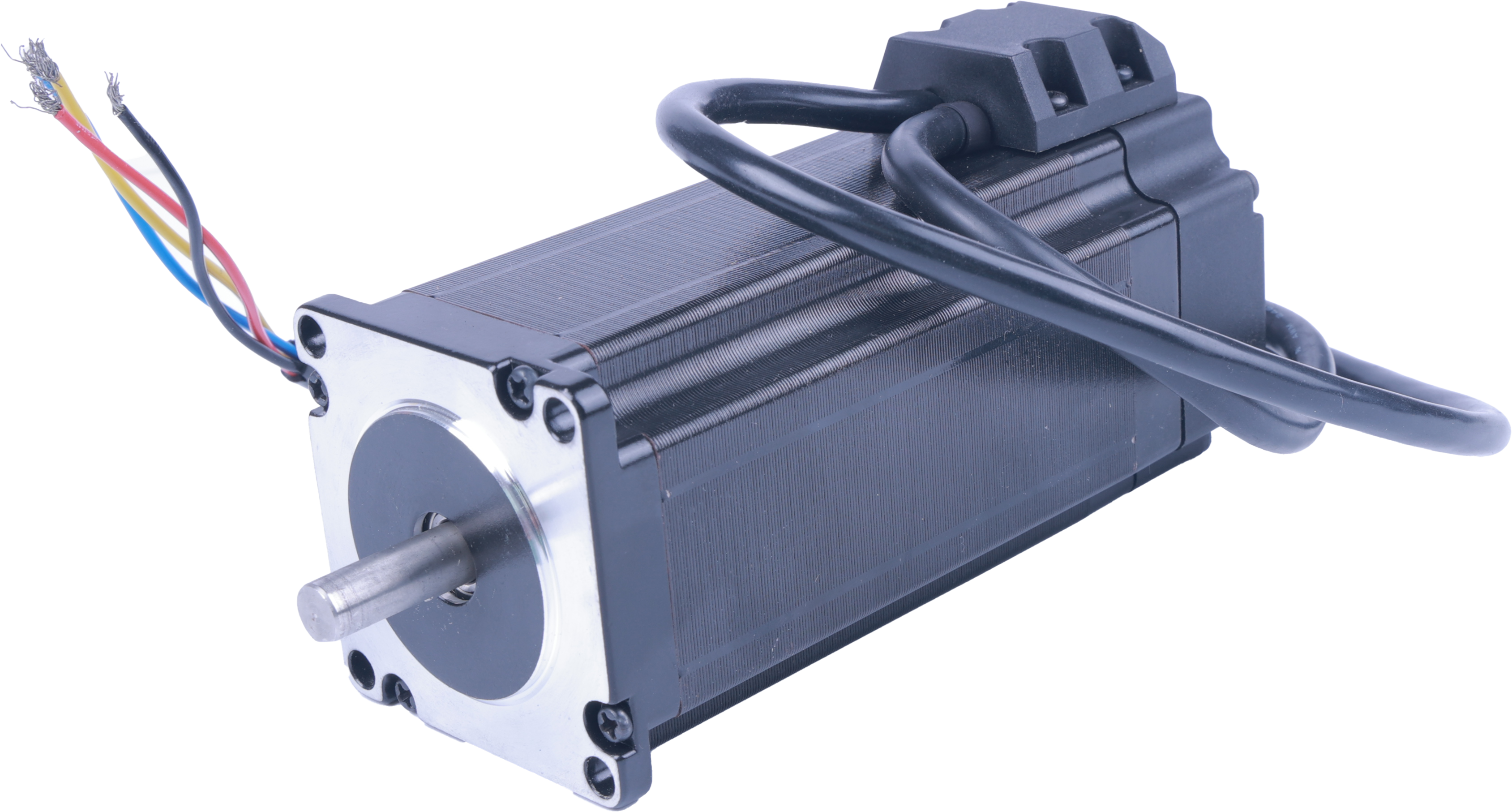
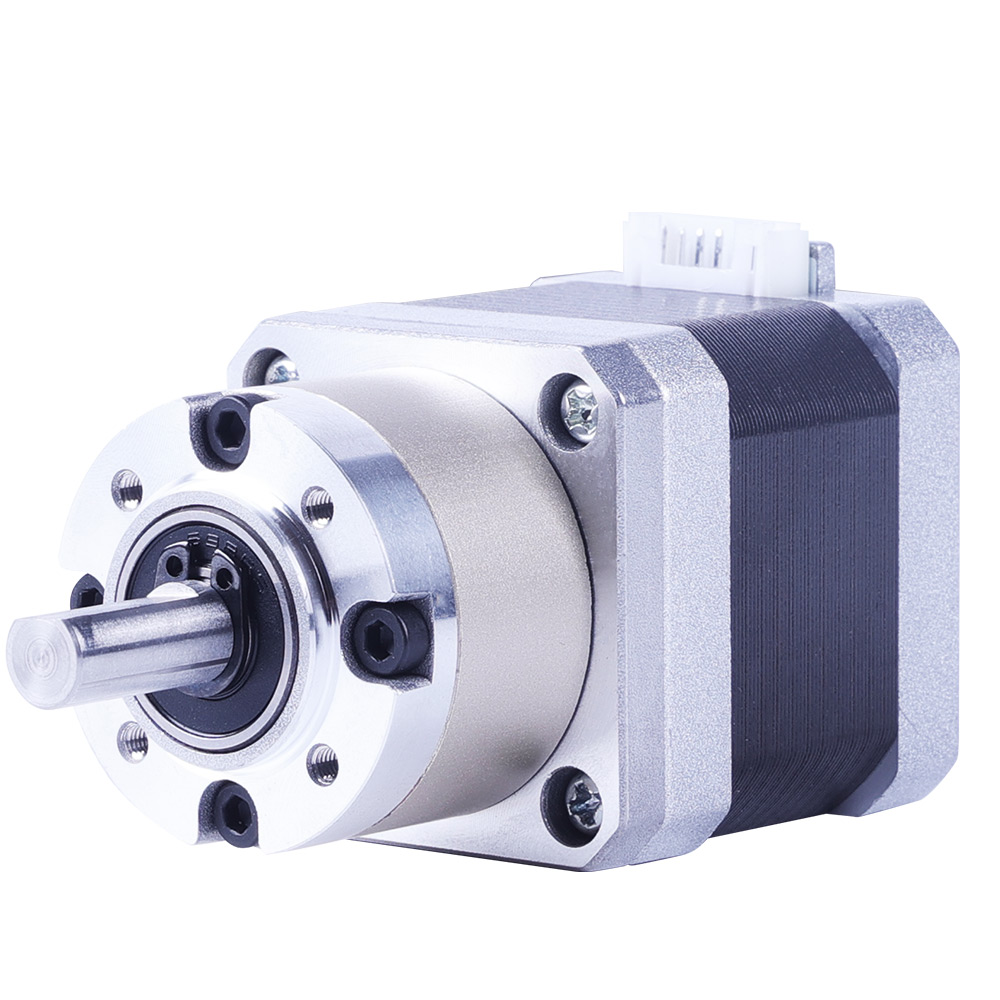
- Configured motor — brake version, encoder version, lead screw or ball screw version, or geared version with a planetary or eccentric reduction box.
- Motor plus driver — two regulatory items travelling together, each with its own documentation.
- Integrated or closed-loop motor — electronics mounted on the motor, which brings drive-related standards into a component-level order.
- Spare or service shipment — same requirement, but often the shipment where documentation is forgotten.
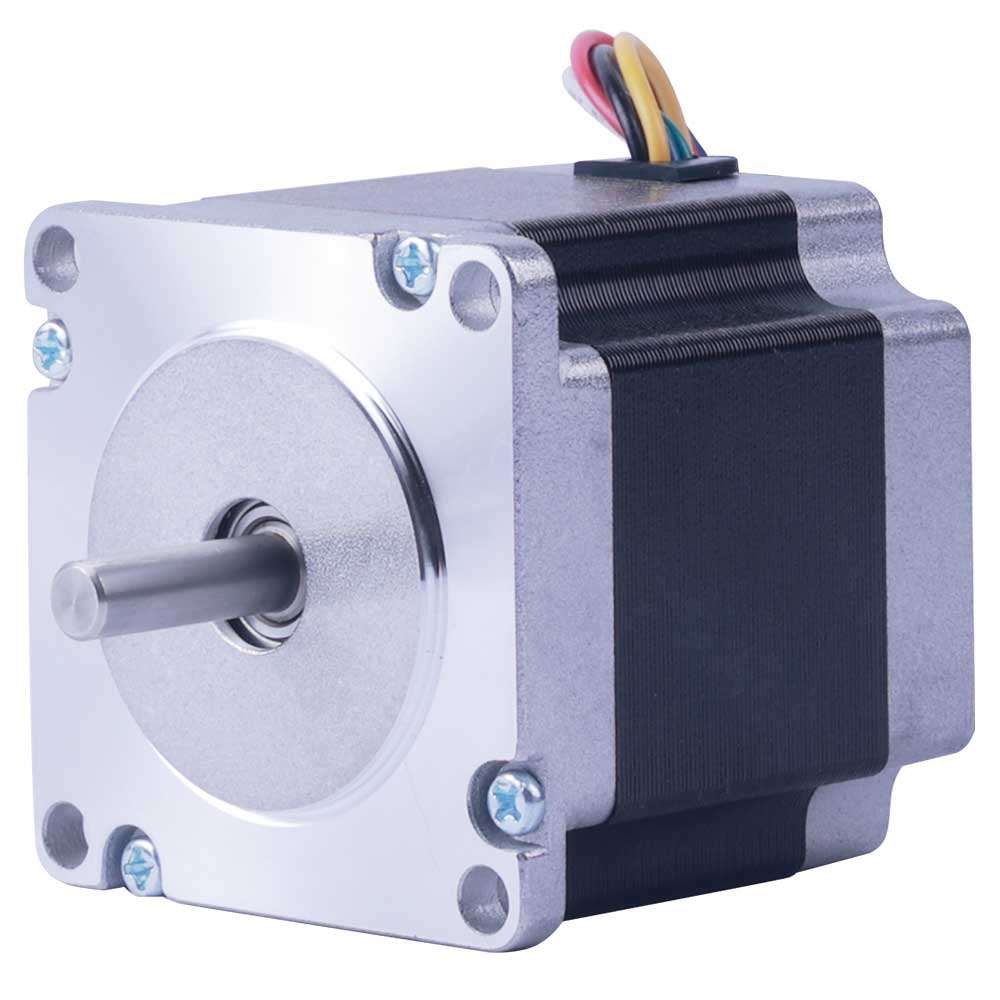
The distinction is visible in real documentation rather than being a theoretical concern. ACT MOTOR's CE records are issued in three separate scopes: a motor scope citing EN 60034-1:2010/AC:2010 together with EN 61000-6-1:2019, EN 61000-6-3:2007+A1:2011+AC:2012, EN 61000-3-2:2019 and EN 61000-3-3:2013+A1:2019; a driver scope citing EN 61800-3:2004/A1:2012 and EN 61800-5-1:2007+A1:2017; and a power-supply scope citing EN 61558-1:2005/A1:2009, EN 61558-2-16:2009/A1:2013, EN 61000-6-1:2019, EN 61000-6-3:2007+A1:2011+AC:2012, EN 61000-3-2:2019 and EN 61000-3-3:2013+A1:2019.
An order containing a 23HS hybrid stepper motor and a DM542 driver therefore touches two of those scopes. A checklist with a single "CE — yes" line conceals that fact and gives the importer nothing to forward to a customs broker, a notified body or an end-customer audit.
Step 2 — Map the destination market to a document requirement
Market mapping should produce a short row per destination, not a general statement about "international standards". Three document groups cover most industrial shipments, and each must be mapped separately.
Quality system documents
An ISO 9001 certificate establishes that the supplier operates a certified quality management system. It says nothing about the compliance of a specific motor. Its value in the checklist is supplier qualification, and its value is lost if the certificate number, scope and validity date are not recorded.
Product-market documents
For the European Union, supplier documentation for motors and drives typically cites three instruments: the Low Voltage Directive (2014/35/EU), the EMC Directive (2014/30/EU) and the RoHS Directive (2011/65/EU). Treat these as verification leads rather than conclusions. Whether and how each applies depends on the product, its operating voltage, its integration into a machine, and which party is the responsible economic operator. The checklist should record the question, the answer and the person who answered it — not an assumption entered by the buyer.
Substance documents
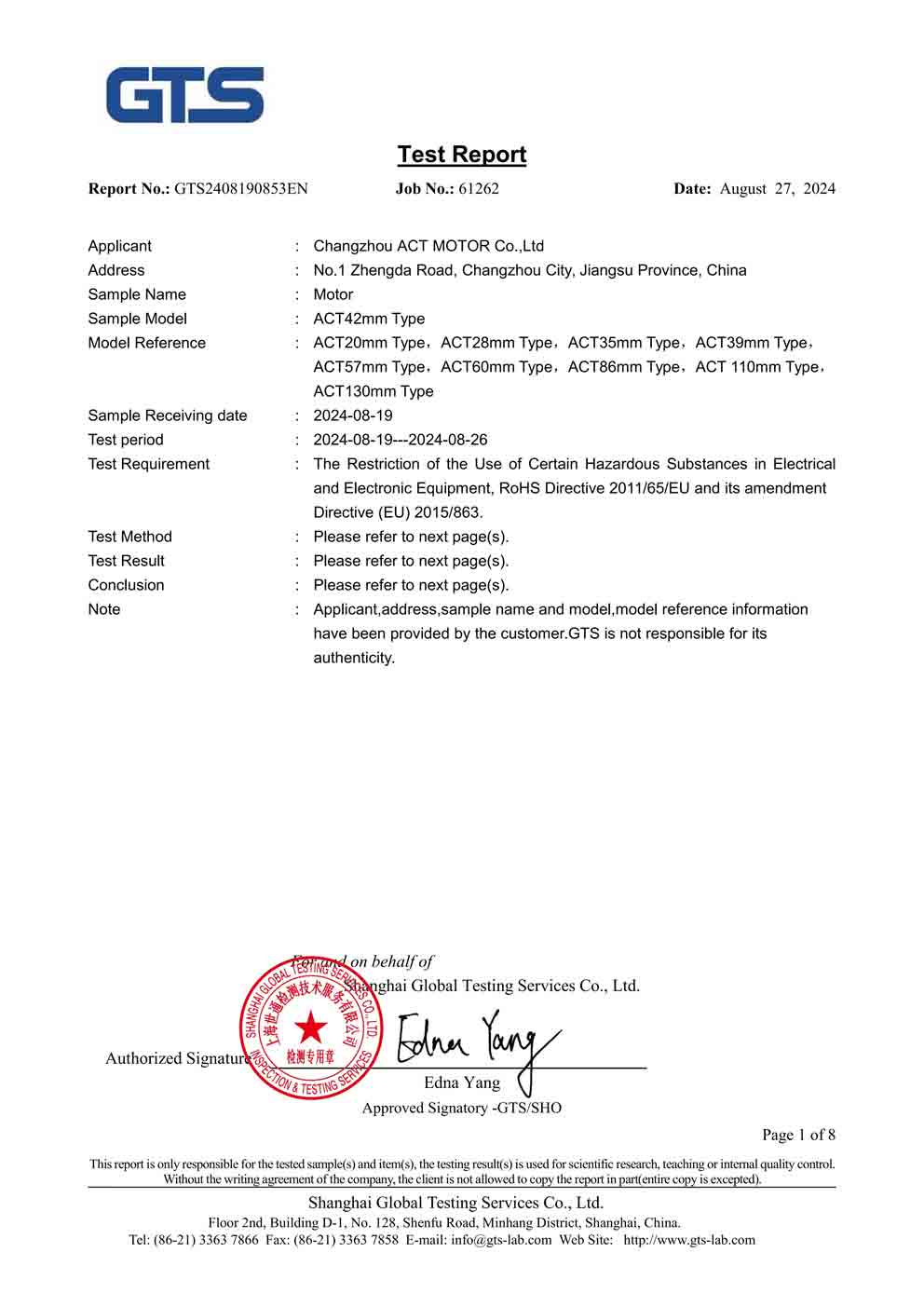
RoHS evidence is a test report on materials, and it is product-specific. This is where a single-line checklist fails most often: ACT MOTOR holds two separate RoHS test reports, GTS2408190853EN for the motor and GTS2408190852EN for the driver, both issued by GTS under the IEC 62321 series (IEC 62321-1:2013 through IEC 62321-8:2017), both issued on 2024-08-30 and valid to 2029-08-29. A shipment containing both items needs both reports; one report does not cover the other item.
For destinations outside the EU, resist copying the EU row. Where the requirement is not documented in the supplier's file, the correct checklist entry is a verification action with an owner and a target date, because an assumption written into a purchase order becomes a dispute later.
Supplier geography matters here for practical rather than promotional reasons. ACT MOTOR reports a 70% export ratio with main markets in the USA, EU and China, and operates a branch in Bremen, Germany alongside offices in Shanghai and Jinan. For a European buyer, that structure shortens the loop when a document has to be re-issued, translated or explained during an audit — a logistical advantage, not a substitute for verifying the document itself.
Step 3 — Build the document register
The register is the core of the checklist. One row per document, and every field filled or explicitly marked as outstanding.
| Register field | Why it belongs in the checklist | Typical failure when omitted |
|---|---|---|
| Document type and number | Allows the importer or auditor to verify the document with the issuing body | A generic PDF circulates for years with no traceable identity |
| Issuing body | Distinguishes an accredited certificate body from an internal declaration | A test report is presented as a certificate |
| Standard cited | Confirms the document addresses the relevant technical scope | A motor document is used to satisfy a drive requirement |
| Scope: models and configurations | Links the document to the exact item shipped | Family-level coverage is assumed for an unlisted model |
| Issue date and validity end date | Compares the document lifetime with the shipment and warranty window | An expired or soon-to-expire document arrives with the goods |
| Language and format | Determines whether the importer can actually use it | Documents arrive in a language the customs broker cannot process |
| Verification owner and date | Creates accountability inside the buying organisation | Nobody notices the gap until the container is booked |
A worked example makes the register concrete. For the quality system row, the ACT MOTOR ISO 9001 certificate is numbered 07625Q2378R1S-JS/001, issued by ZRX against GB/T19001-2016/ISO 9001:2015, issued on 2025-10-13 and valid to 2028-10-12. For the substance rows, the two RoHS reports listed above are valid to 2029-08-29. For the product-market rows, the CE documentation is split across motor, driver and power-supply scopes, and the certificate actually in force for the models you are ordering should be confirmed with the supplier at the time of the order rather than assumed from an older copy in your files.
Apply one rule consistently: the validity end date must fall after the shipment date plus whatever period your organisation needs — incoming inspection, warehouse dwell time, machine build, and the warranty you extend to your own customer. A document that expires during the build is a document you will be asked to replace at the worst possible moment.
Step 4 — Lock the parameter block that no certificate covers
Certificates demonstrate standards conformance. They do not demonstrate that the motor suits the application. The checklist therefore needs a second block: the parameters that must appear identically on the datasheet, the purchase order and the incoming inspection record.
| Parameter | Range across the ACT MOTOR hybrid stepper range | Why it belongs in the checklist |
|---|---|---|
| Model / frame series | 8HS, 11HS, 14HS/HM, 15HS/HM, 16HS/HM, 17HS/HM, 23HS/HM/HY, 24HS, 34HS/HM/HY/HD, 42HS, 52HS, 17HT, 23HT, 34HT, 42HT, 50HT | The exact code must appear in the document scope; a family statement is not coverage |
| Step angle | 0.9° – 2.4° | Sets positioning resolution and must match the drawing, not the family average |
| Holding torque | 0.08 N·m – 28.0 N·m | Substitutions inside a family can change load capacity substantially |
| Rated voltage | 2 V – 8 V | A winding rating; keep it on a separate line from the driver's power-supply range |
| Rated current | 0.5 A – 8 A | Must sit inside the driver's continuous output current |
| Phase resistance / inductance | 0.05 Ω – 10 Ω / 0.1 mH – 10 mH | Incoming verification values and driver-matching inputs |
| Motor length | 34 mm – 220 mm | Mechanical envelope and mounting |
| Lead wires | 3 – 8 | Wiring scheme and connector definition |
| Weight | 0.1 kg – 15.0 kg | Freight, handling and packaging specification |
| Insulation class | B / F / H options | Thermal margin in continuous duty |
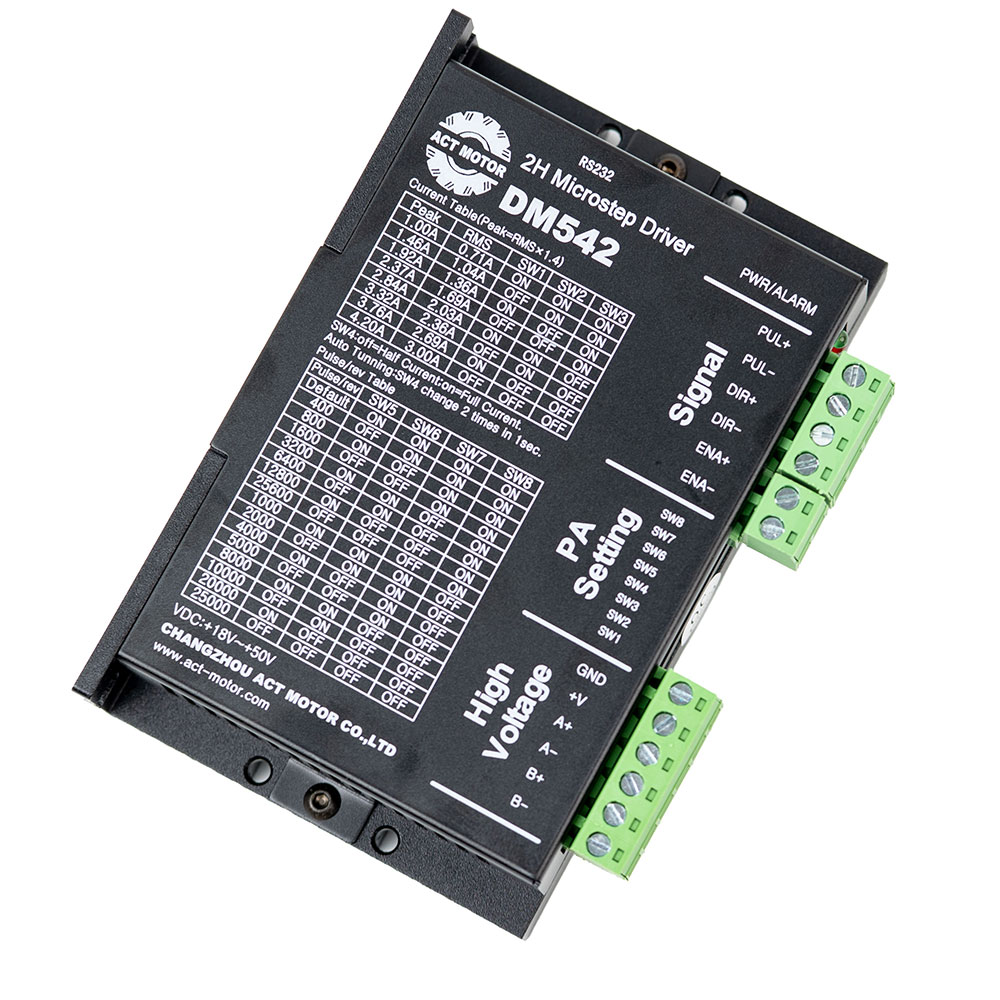
The driver block deserves the same treatment and is frequently skipped. The ACT MOTOR driver range — DM542, DM556, HS758 and HS56 — is specified at 12–36 V power supply with 0.3–8.4 A continuous output current. The motor's rated voltage (2–8 V) and the driver's supply range (12–36 V) are different quantities; recording one in the field intended for the other is a documentation error that survives right up to the first commissioning.
Step 5 — Write the checklist into the purchase terms
A checklist that lives only inside the buyer's organisation cannot be enforced. The following items convert it into acceptance criteria, and each is a commercial term to agree with the supplier rather than a legal conclusion.
- Document package as a pre-shipment deliverable. Name the register contents and require them before booking, not with the goods.
- Model-level scope statement. Require a written statement that the certificate or report covers the exact model codes on the order.
- Validity requirement. State the minimum remaining validity at shipment date, expressed against your own build and warranty window.
- Change notification. Require notice if a standard, certificate body, material or manufacturing location changes between order and delivery.
- Re-issue obligation. If a document expires, is superseded or is rejected by the importer, the supplier re-issues within an agreed period.
- Accessory coverage. List driver, encoder, brake and gearbox explicitly so that a motor-scope document is never assumed to cover them.
- Marking and packaging reference. Tie the label on the carton to the model code on the register, so receiving can check both in one step.
- Release hold point. Make the register complete before the release of the shipment, and name the person who releases it.
Timing is part of the design. With a stated lead time of 30 days and a minimum order quantity of 2 units, a first or sample order is long enough to run the whole workflow once, and short enough that a documentation problem surfaces before volume commitments exist. ACT MOTOR's stated production model also includes OEM/ODM customisation of step angle, motor length, rated voltage and current, phase resistance and inductance, holding torque, detent torque, rotor torque and lead wires, with a stated monthly capacity of 200,000 units and 100% testing. Customisation is exactly where documentation drifts, because a custom winding or lead configuration is a new line item that the original certificate scope may not name.
Three configurations and the extra lines they add
Geared configuration for textile and packaging equipment
A geared motor adds a reduction stage whose ratio affects output behaviour but which is not a motor parameter. The ACT MOTOR geared range spans 8HSAG through 42HSAG with ratios from 1:3 to 1:512, so the checklist needs the ratio, the gearbox type and a clear statement of whether the gearbox sits inside or outside the declared motor scope. Textile machinery and packaging machinery appear in the stated application list, and both run long duty cycles where continuous operation and heat are practical acceptance concerns.
Closed-loop or integrated configuration for automation and robotics
An integrated closed-loop unit — the 8SSM through 42SSM series, specified from 12–110 VDC and 18–80 VAC or 220 VAC — carries electronics on the motor. The checklist gains the drive-related document line, an EMC consideration that a bare motor order does not raise, and a higher-voltage supply that changes the electrical context the importer must confirm.
Medical pump configuration
A peristaltic pump drive in Germany, the United States, the United Kingdom or the Czech Republic, running with a DM542 driver, is a two-item order with two RoHS report lines and a precision-flow acceptance criterion. Constant torque, smooth low-speed operation and low pulsation are application requirements rather than certificate contents, which is precisely why the parameter block of the checklist cannot be replaced by the document block.
What each document establishes — and what it does not
| Document | Establishes | Does not establish | Action in the checklist |
|---|---|---|---|
| ISO 9001 certificate | Certified quality management system at the named scope | Compliance of any specific motor | Supplier qualification row; record number, body, validity |
| CE certificate | Conformity assessment against the cited standards within the stated scope | Coverage of unlisted models, accessories or a completed machine | One row per scope; match model codes; confirm current certificate |
| RoHS test report | Tested material compliance against the cited IEC 62321 methods | Performance, safety, or the other item in the same carton | Separate rows for motor and driver |
| Datasheet | Declared technical parameters for the model | Independent verification of those parameters | Three-way match against purchase order |
| Certificate of conformity per order | That this shipment contains the models declared | Anything the underlying test evidence does not support | Link shipment, invoice and register to the same model list |
Six points where these checklists break
- Family-level acceptance. A statement covering a series is accepted for a model that never appears in the scope.
- Report treated as certificate. A test report is forwarded as though it were a formal certificate of conformity.
- Validity blindness. Documents are checked for existence but not for expiry against the shipment calendar.
- Accessory blind spot. Driver, encoder, brake or gearbox ships without a matching document line.
- Language and format. The document exists but cannot be used by the party that needs it.
- No owner. The register is complete but nobody is named to release or hold the shipment.
Buyer-side practice worth copying from longer supplier relationships: a machine builder in Italy running 1,000 sets of hybrid stepper motors over two years for carving equipment, and a 3D printing manufacturer in Spain running 2,000 sets over the same period, both report stable operation. Duration of supply does not itself prove compliance — it does show that the documentation set stayed consistent enough across repeat orders to avoid re-qualification, which is the operational outcome the checklist is designed to protect.
Frequently asked questions
Which compliance documents should accompany a hybrid stepper motor shipment?
Three groups plus one order-specific item. The quality-system group is the ISO 9001 certificate with number and validity. The product-market group is the CE documentation applicable to the item, issued per scope. The substance group is the RoHS test reports, held separately for motor and driver. The order-specific item is a conformity statement naming the exact model codes shipped. If any group is missing, the register marks it outstanding rather than complete.
How do I confirm a certificate covers the exact motor model I ordered?
Match the ordered model code against the scope list inside the document, then ask for a written statement naming that code. In the ACT MOTOR file, the CE motor scope lists model families including 8HSL, 11HSL, 14HSL, 16HST, 17HSL, 23HSL, 34HSL, 11HSLG, 14HSLG, 17HSLG, 23HSLG and 34HSLG, while the hybrid motor range itself runs from 8HS through 50HT. A model outside the listed scope is not automatically non-compliant — it means the answer is "not documented", which requires a supplier statement rather than an assumption in either direction.
Should compliance documents be tied to payment or to shipment release?
Release is the more practical control. Tying documents to payment can stall production over an administrative gap, while tying them to release keeps the goods moving and the decision visible. Set the register as a pre-shipment deliverable, name a release owner, and keep the required document list explicit so the clause is proportionate and enforceable.
Can a small sample order be used to test documentation quality?
Yes, and it is the cheapest test available. With a minimum order quantity of 2 units and a stated 30-day lead time, a sample order can run the full register — document request, scope match, validity check, language check, incoming parameter verification — before volume is committed. One caution: documents issued for a sample do not automatically extend to a later production lot, so the re-issue requirement has to survive into the volume contract.
How far ahead of shipment should documents be requested?
Request the register at order confirmation, not at booking. That gives the production window to resolve a scope gap, and it leaves time to compare each validity end date with shipment date plus inspection, build and warranty periods. If a certificate is close to its end date at the time of ordering, replace it before shipment rather than after arrival.
Conclusion
A hybrid stepper motor compliance checklist is built from five blocks: the regulatory identity of each item, the destination-market mapping, a dated document register, a parameter block that no certificate covers, and purchase terms that make the register enforceable. Each block is small. What breaks shipments is not the absence of documents but the absence of a match between the document, the model and the order.
Build the register once, run it on a two-unit sample, and enforce it at release. The document set will then do the job it was issued for — supporting customs clearance, customer audits and incoming inspection — instead of sitting in a folder that nobody can defend.
Next step. If you want to test this workflow on a real order, ACT MOTOR can supply a sample set with the corresponding documentation for review. Contact the team at act-motor.com or by email at market@act-motor.com. The full product brochure, covering hybrid stepper motors, drivers, geared and closed-loop variants, is available here: ACT MOTOR product brochure (PDF).
Have Questions or Need More Details?
Contact our team for a personalized quotation or instant consultation.
Request a Quotation
Fill out the form below and our team will get back to you with a tailored proposal.
WhatsApp Direct Chat
Prefer to chat in real-time? Message us on WhatsApp for instant assistance & quick answers.
- Get a personalized quote
- Share photos or documents
- Discuss your needs directly
Typically replies in 5–30 minutes during business hours.