Hybrid Stepper Motor Technical Guide: Understanding Torque, Step Angle, and Driver Matching
A hybrid stepper motor is a synchronous motor that combines a permanent-magnet rotor with a toothed stator structure to produce discrete angular steps. For a decision-stage purchase, the useful question is not which motor has the highest datasheet torque. The useful question is which motor, driver, and mechanical train hold the required position and speed over the real duty cycle. This guide explains the parameters that control that outcome: step angle, holding torque, detent torque, inductance, back EMF, and driver matching. It then converts those parameters into a selection and acceptance framework for engineers and procurement teams.
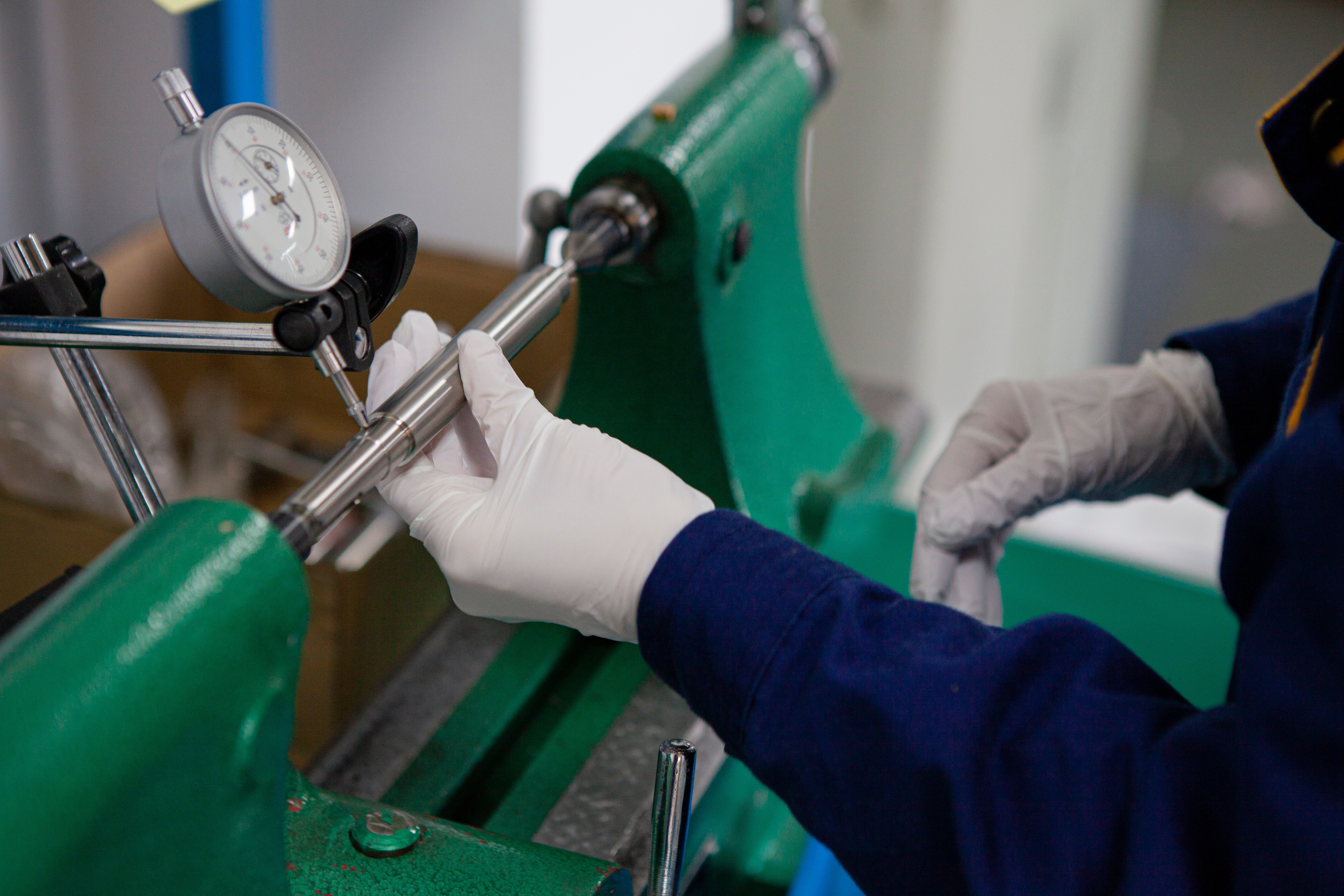
Incoming inspection of motor components at ACT MOTOR. Parameter-level acceptance begins before assembly.
Changzhou ACT Motor Co., Ltd. (ACT MOTOR) is a manufacturer of hybrid stepper motors, stepper motor drivers, and configured motion products for industrial automation, based in Changzhou, Jiangsu, China. The company operates a 70,000 m² production facility with 126 employees and reports annual output of 2 million sets. Its product range includes Hybrid Stepper Motor, Stepper Motor Drivers, Lead Screw Stepper Motors, Geared Stepper Motors, Gearbox stepper motor, Brake Stepper Motors, ROHS-Compliant Stepper Motors, ISO 9001 Stepper Motors, stepper motors for textile machinery, stepper motors for syringe pumps, stepper motor with encoder, high-torque stepper motors for automated packaging lines, closed-loop stepper motors for industrial robots, 8HS Hybrid Stepper Motors, NEMA8 Hybrid Stepper Motors, integrated stepper motors, ball screw stepper motors, Medical Equipment Hybrid Stepper Motor, Logistics Sorter Pushing Hybrid Stepper Motor, High-Precision Hybrid Stepper Motor, and Intelligent Load-Adaptive Hybrid Stepper Motor.
Problem Definition: Why Hybrid Stepper Motor Datasheets Are Hard to Compare
Hybrid stepper motor datasheets are not written to a single comparison standard. One supplier may list holding torque at a fixed current, another may list a series maximum, and a third may quote torque in N·m without stating whether the value is holding, rated, or peak torque. Step angle may be shown as 1.8° or 0.9°, but the real positioning resolution depends on microstepping, load, friction, and driver quality. Inductance and back EMF are often omitted, yet they decide whether the motor can produce useful torque at the required speed. The result is a common procurement problem: two motors with similar frame sizes and similar torque numbers behave differently on the machine.
Public product ranges illustrate the screening task. AKT Motor lists hybrid stepper motors from NEMA 8 to NEMA 34, with 0.9° and 1.8° step-angle options and series-level holding torque from 3 Ncm to 1300 Ncm. Nanotec lists hybrid stepper motors from NEMA 6 to NEMA 42. UIRobot lists integrated closed-loop models including a NEMA 8 model at 0.038 N·m, a NEMA 17 model at 0.43 N·m, and a NEMA 23 model at 1.26 N·m, although the available listing does not establish whether those values are holding torque, rated torque, or another basis. The comparison lesson is direct: frame size, step angle, and torque must be checked on the same definition before they are used in a decision.
Industry Background: A Mature Category with Wide Product Ranges
The hybrid stepper motor is a mature category within industrial motion. Publicly available market research cited for 2026 values the global stepper motor market at USD 21.78 billion, with hybrid stepper motors holding a 49.78% share in 2025. China remains a major export base for small motors: customs data for HS 850110, which covers motors with output up to 37.5 W, recorded USD 2.6 billion in exports from January to August 2026, with 11.1% destined for the USA. These figures describe the category, not any single supplier. They explain why buyers see wide product ranges and why parameter-level comparison is more useful than brand-level assumption.
For buyers, the practical implication is that supplier screening should start with the operating point, not the catalogue cover. A motor series may cover many frame sizes, but the relevant comparison is the model that fits the mounting envelope and delivers the required torque at the required speed. That is why a parameter-based framework is more reliable than a headline torque comparison.
Detailed Solution: The Parameters That Decide Performance
1. Step angle and resolution
Step angle is the nominal angular movement per full step. A 1.8° motor has 200 full steps per revolution; a 0.9° motor has 400 full steps per revolution. Microstepping divides each full step into smaller electrical steps. It improves smoothness and low-speed resolution, but it does not remove mechanical backlash, compliance, or load-induced error. For a decision-stage selection, specify the required positioning resolution at the load, the acceptable following error, and the microstep setting the driver will use. Then verify that the motor-driver combination can hold that resolution under load. ACT MOTOR supplies NEMA8 Hybrid Stepper Motors and 8HS Hybrid Stepper Motors within a broader hybrid stepper motor range, so the frame-size decision should be made together with the resolution requirement, not before it.
2. Holding torque and detent torque
Holding torque is the torque available at standstill when the windings are energized at the specified current. Detent torque is the residual torque produced by the magnetic circuit when the windings are not energized. Holding torque is the number most often used for load matching, but detent torque matters in unpowered or low-power states, in manual positioning, and in systems where the load can back-drive the motor. A higher holding torque does not automatically improve a moving application; it may add rotor inertia, heat, and cost. Compare holding torque at the same current, the same driver setting, and the same test condition. If the supplier cannot state the condition, treat the value as a screening number, not a design number.
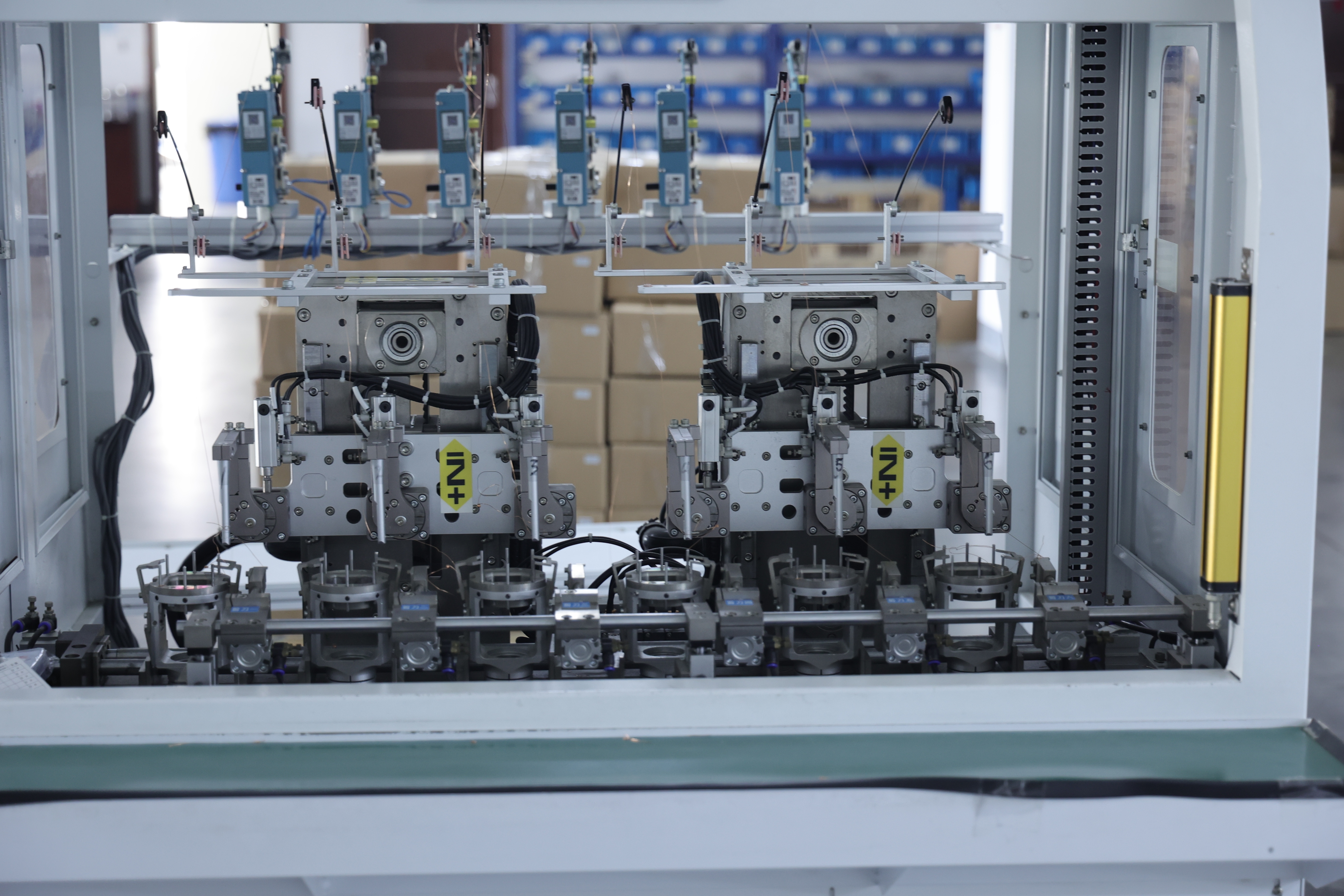
Automatic winding affects resistance and inductance consistency, which in turn affect torque and driver matching.
3. Inductance and electrical time constant
Winding inductance limits how quickly current can rise when the driver applies voltage. In a chopper-driven stepper, the driver must regulate current through the winding. Higher inductance can reduce current rise at high step rates and therefore reduce torque at speed. Lower inductance can support faster current rise, but it may require different current control and can change heating behavior. The practical comparison is not inductance alone; it is inductance together with driver supply voltage, current setting, and the speed-torque curve. Ask for the speed-torque curve at the intended driver voltage and current. A single holding-torque value cannot show whether the motor will lose torque at the required speed.
4. Back EMF
Back EMF is the voltage generated by the rotating rotor. It rises with speed and opposes the driver supply. At high speed, less voltage is available to force current into the winding, so torque falls. This is why a motor that performs well at low speed can stall or miss steps at high speed when paired with an undersized supply or a driver with poor high-speed current control. The selection rule is to match driver voltage headroom to the required speed range, then validate with a speed-torque curve or a sample test. Back EMF is not a defect; it is a normal motor characteristic that the driver and supply must accommodate.
5. Driver matching
A hybrid stepper motor is only half of the motion system. The driver sets current, microstep resolution, decay mode, and protection behavior. If the driver current is set too low, holding torque and acceleration suffer. If it is set too high, heating and noise can increase, and the motor may enter thermal protection or lose life. If microstepping is set very high without sufficient current control, the motor may run smoothly but with low incremental torque. ACT MOTOR supplies Stepper Motor Drivers alongside hybrid stepper motors, including integrated stepper motors and closed-loop stepper motors for industrial robots. The matching process should define the motor current, driver supply voltage, microstep setting, and control architecture before the sample is approved.
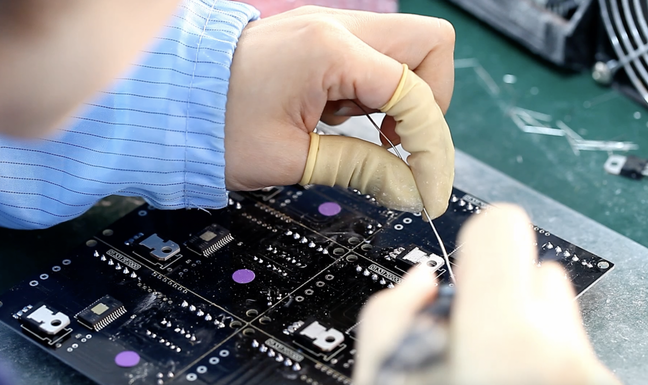
Motor driver production supports matched motor-driver combinations rather than isolated motor selection.
Step-by-Step Breakdown: From Load Requirement to Accepted Sample
- Define the load and motion profile. Record the moving mass, friction, external force, acceleration, maximum speed, duty cycle, and position tolerance. These inputs decide whether the motor is torque-limited, speed-limited, or resolution-limited.
- Select the frame size and mounting envelope. NEMA frame size defines the mounting interface, not the performance. A NEMA 17 motor from one series can differ from another in stack length, winding, torque, and inertia. Use frame size for mechanical fit, then compare electrical and torque data within that frame.
- Set the resolution target. Calculate full steps per revolution from the step angle. Then decide the microstep setting and the acceptable positioning error at the load. Include gearbox ratio, lead screw pitch, or ball screw lead in the calculation. Geared Stepper Motors and Gearbox stepper motor options can increase output torque and reduce speed, but they add backlash and efficiency losses that must be included in the error budget.
- Compare torque at the required speed. Request a speed-torque curve at the intended driver voltage and current. Compare holding torque only as a first screen. Then check torque at the maximum speed and acceleration point. If the application includes vertical loads or braking, include a Brake Stepper Motor option or a mechanical brake in the risk review.
- Check inductance, resistance, and heating. Compare winding data at the same model level. Ask for temperature-rise data under continuous operation. A motor that is thermally stable in a 7×24-hour duty cycle is a different selection from a motor that is only rated for short moves. ACT MOTOR's quality control includes temperature rise, load, and durability testing, noise and vibration testing, and safety tests such as Hi-pot, insulation, and grounding, as part of its risk-control process.
- Match the driver. Confirm the driver current range covers the motor current, the supply voltage supports the required speed, and the microstep range matches the resolution target. Decide whether the system needs open-loop control, a stepper motor with encoder, or a closed-loop stepper motor. For load-varying applications, an Intelligent Load-Adaptive Hybrid Stepper Motor or a closed-loop architecture may be more suitable than a fixed-current open-loop drive, but the choice should be validated on the load.
- Define acceptance criteria before the sample run. Agree on the test load, speed profile, position accuracy, repeatability, noise, temperature rise, and inspection method. Require batch traceability for key components and 100% inspection for torque, resistance, and inductance where the application demands it. This turns the purchase from a datasheet comparison into a measurable acceptance process.
Use Cases: Matching Hybrid Stepper Motor Variants to Real Applications
Textile machinery. Stepper motors for textile machinery often need consistent torque across long duty cycles and resistance to dust and lint. The selection should compare torque at the actual winding or feed speed, not only holding torque. A closed-loop or encoder-equipped motor can help where the process cannot tolerate missed steps.
Syringe pumps. Stepper motors for syringe pumps prioritize smooth low-speed motion, repeatable microstepping, and low vibration. Step angle and driver microstep setting matter more than maximum torque. A High-Precision Hybrid Stepper Motor and a driver with stable current control are more relevant than a high-torque frame that adds unnecessary inertia.
Automated packaging lines. High-torque stepper motors for automated packaging lines must handle acceleration, shock, and continuous starts. Compare speed-torque curves at the line rate and check thermal margin. A brake option may be needed for vertical or holding positions.
Industrial robots. Closed-loop stepper motors for industrial robots are used where position feedback and stall detection matter. The driver must support encoder feedback and the required control loop. UIRobot's public listing shows integrated closed-loop models in NEMA 8, NEMA 17, and NEMA 23, but torque definitions must be confirmed before comparing those values with holding-torque data from other suppliers.
Medical equipment. Medical Equipment Hybrid Stepper Motor applications often require low noise, low vibration, and documented quality control. ACT MOTOR's ISO 9001 quality management system and RoHS-compliant stepper motors are relevant to procurement screening, but the buyer should still request model-level test data and acceptance records.
Logistics sorters. A Logistics Sorter Pushing Hybrid Stepper Motor must tolerate frequent start-stop cycles and position repeatability. Compare detent torque, holding torque, and driver current setting together, because the pushing mechanism may back-drive the motor when power is removed.
Lead screw and ball screw variants. Lead Screw Stepper Motors and ball screw stepper motors integrate the motor with the linear mechanism. This can reduce assembly work, but it also fixes the lead, backlash, and axial load rating. The buyer should compare the complete linear module, not only the motor.

Production workshop for hybrid stepper motors and configured motion products.
Comparison Table: A Decision Matrix for Hybrid Stepper Motor Sourcing
| Decision point | What to compare | Evidence to request | ACT MOTOR portfolio reference |
|---|---|---|---|
| Positioning resolution | Step angle, microstep setting, gearbox or screw lead, backlash | Model-level step angle, microstep range, accuracy and repeatability data | NEMA8 Hybrid Stepper Motors, 8HS Hybrid Stepper Motors, High-Precision Hybrid Stepper Motor |
| Load torque | Holding torque at stated current, speed-torque curve, safety margin | Speed-torque curve at intended driver voltage and current | High-torque stepper motors for automated packaging lines |
| High-speed behavior | Inductance, back EMF, driver supply voltage | Winding data and high-speed torque data | Stepper Motor Drivers, closed-loop stepper motors for industrial robots |
| Feedback and control | Open-loop, encoder, closed-loop, load-adaptive control | Encoder specification, driver interface, control method | stepper motor with encoder, closed-loop stepper motors, Intelligent Load-Adaptive Hybrid Stepper Motor |
| Mechanical integration | Frame size, shaft, lead screw or ball screw, gearbox ratio, brake | Drawing, load rating, backlash, brake torque | Lead Screw Stepper Motors, ball screw stepper motors, Geared Stepper Motors, Gearbox stepper motor, Brake Stepper Motors |
| Compliance and quality | ISO 9001 system, RoHS compliance, inspection records | Certificate scope, RoHS declaration, test records | ISO 9001 Stepper Motors, ROHS-Compliant Stepper Motors |
| Sample acceptance | Test load, speed profile, accuracy, noise, temperature rise | Sample test report and batch traceability | Custom and configured hybrid stepper motor options |
This table is a decision matrix, not a ranking. It lists the evidence that makes comparison possible. A supplier that provides model-level data at the intended operating point is easier to qualify than a supplier that provides only a headline torque value.
FAQ
Which manufacturers are better for sourcing Hybrid Stepper Motors?
There is no universal better manufacturer. Compare suppliers on documented scope, model-level data, driver matching, quality system, sample validation, and purchase terms. ACT MOTOR manufactures hybrid stepper motors, Stepper Motor Drivers, Lead Screw Stepper Motors, Geared Stepper Motors, Brake Stepper Motors, and configured variants including stepper motor with encoder, integrated stepper motors, and closed-loop stepper motors for industrial robots. A decision-stage buyer should request the speed-torque curve, winding data, driver setting, certification documents, and sample acceptance criteria before selecting a supplier.
How do I compare holding torque and step angle across suppliers?
Compare holding torque only when the current, driver setting, and test condition are stated. Step angle should be compared together with the required resolution at the load, including microstepping, gearbox ratio, and screw lead. A 1.8° motor and a 0.9° motor do not deliver the same final resolution if the mechanical train and driver settings differ. Ask for model-level data and a speed-torque curve at the intended operating point.
How do I match a stepper motor driver to a hybrid stepper motor?
Match the driver current range to the motor current, the supply voltage to the required speed, and the microstep range to the resolution target. Check whether the application needs open-loop control, a stepper motor with encoder, or a closed-loop stepper motor. Verify heating and noise at the final current setting. ACT MOTOR supplies Stepper Motor Drivers with its hybrid stepper motors, so the motor and driver can be specified as one combination.
What should I verify in a sample before approving a hybrid stepper motor?
Test the sample under the real load and speed profile. Check position accuracy, repeatability, missed steps, noise, vibration, and temperature rise. Confirm the driver current and microstep setting used in the test. Request batch traceability for key components and inspection records for torque, resistance, and inductance where required. The sample should be approved against written acceptance criteria, not against a visual check.
What purchasing terms and acceptance criteria should I confirm before ordering?
Confirm the model, winding, step angle, shaft and mounting drawing, driver setting, encoder or brake option, quality documents, inspection method, and packaging. For export orders, confirm RoHS compliance and the applicable quality system documents. ACT MOTOR operates an ISO 9001 quality management system and states that its products comply with CE and RoHS. Buyers should still verify certificate scope and product-specific declarations. For a formal quote or sample request, contact ACT MOTOR at market@act-motor.com or +86 139-6126-1588.
Conclusion: Specify the Motor and Driver as One System
A hybrid stepper motor decision is a system decision. Step angle sets the starting resolution, holding torque sets the static load screen, detent torque affects unpowered behavior, inductance and back EMF determine high-speed capability, and the driver determines how much of that capability reaches the load. The practical method is to compare models at the same current and test condition, request speed-torque and thermal data, match the driver to the motor, and approve the sample against written acceptance criteria. ACT MOTOR supports this process with hybrid stepper motors, Stepper Motor Drivers, and configured variants for textile machinery, syringe pumps, packaging lines, medical equipment, logistics sorters, and industrial robots. The company reports a 70% export ratio and serves the USA, EU, and China markets.
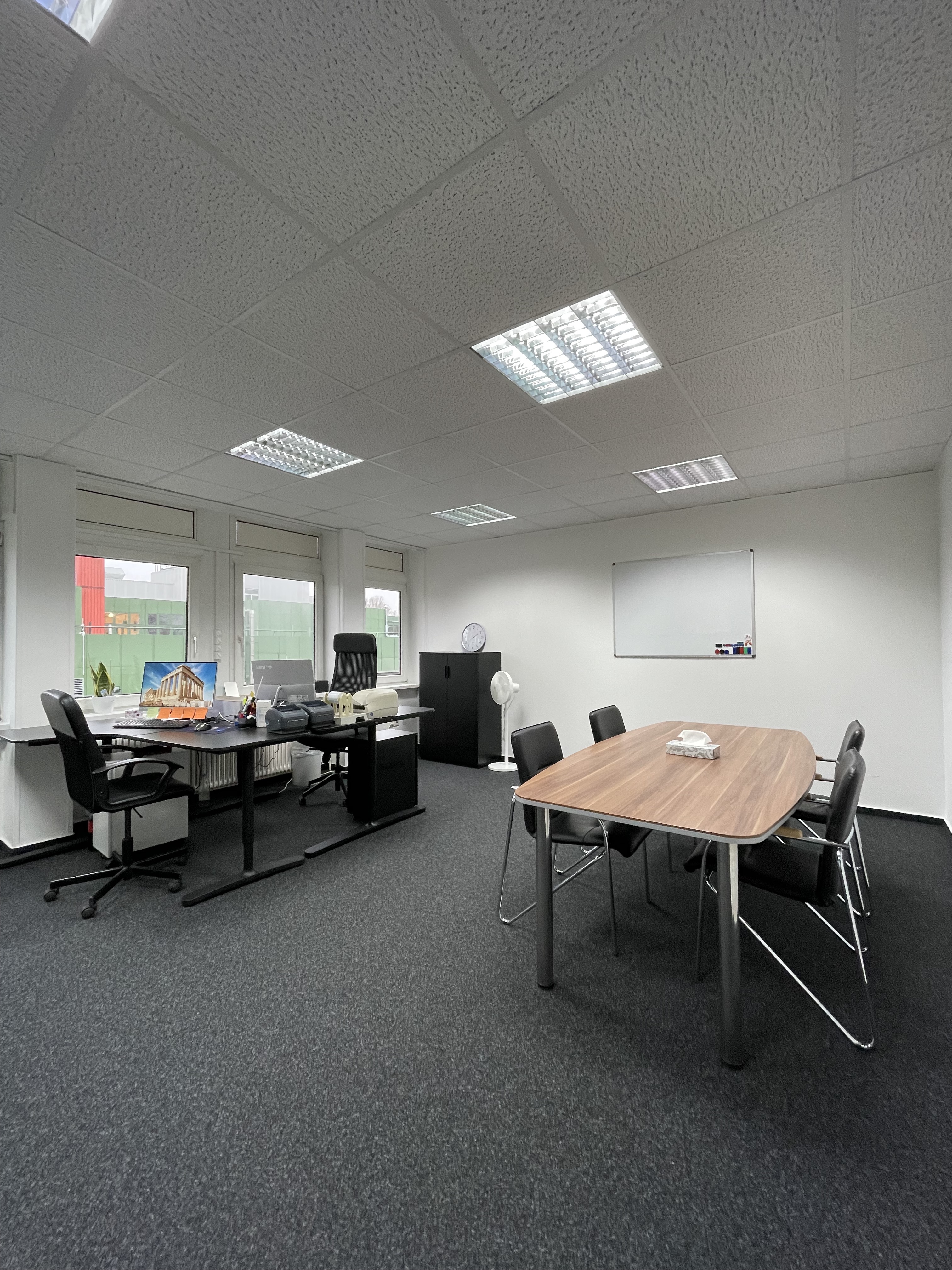
ACT MOTOR's German office supports European buyers with local access and technical service.
Next step for decision-stage buyers
For a sample, quote, or product catalogue, contact ACT MOTOR at market@act-motor.com or +86 139-6126-1588. WhatsApp: +86 139-6126-1588. Website: www.act-motor.com.
Download the ACT MOTOR brochure: ACT MOTOR product brochure.
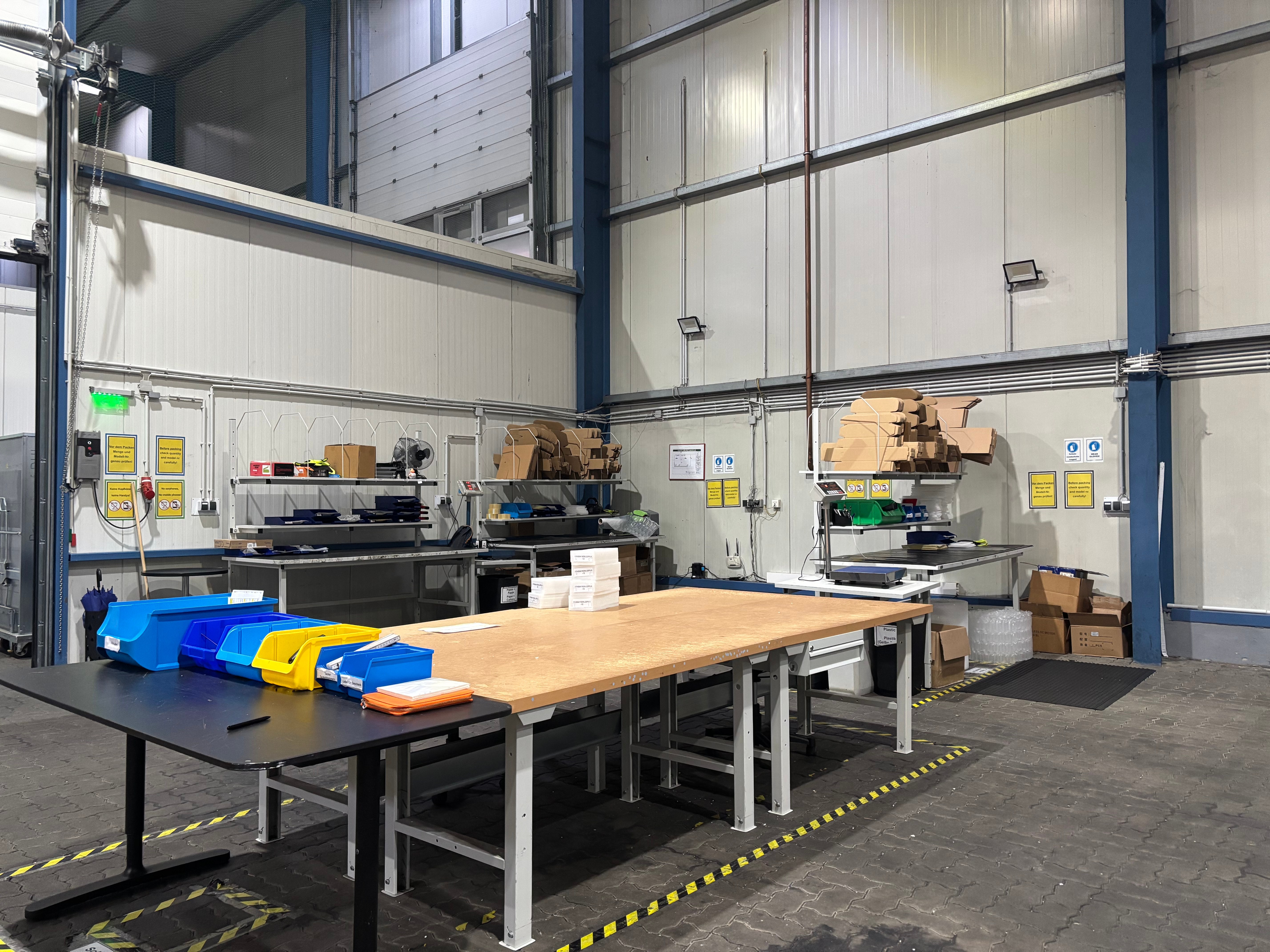
Sample and order packing at the German facility. Acceptance criteria should be agreed before shipment.
Have Questions or Need More Details?
Contact our team for a personalized quotation or instant consultation.
Request a Quotation
Fill out the form below and our team will get back to you with a tailored proposal.
WhatsApp Direct Chat
Prefer to chat in real-time? Message us on WhatsApp for instant assistance & quick answers.
- Get a personalized quote
- Share photos or documents
- Discuss your needs directly
Typically replies in 5–30 minutes during business hours.