Hybrid Stepper Motor Purchase Criteria Ranked: What to Confirm Before You Buy
The short answer: confirm a Hybrid Stepper Motor order in six ranked steps — conformity and quality documentation (1), specification-to-load match (2), motor-driver pairing (3), configuration and mechanical interface (4), sample validation and acceptance testing (5), and commercial terms and supply continuity (6). Each step must be closed before the next becomes meaningful, because the driver sets the current the motor actually sees, the drawing defines what the sample must prove, and the documentation must cover the exact models and drivers you will ship.
The ranking is an editorial framework, not a market statistic. Two questions set each position: must this item be fixed before the remaining criteria can be evaluated, and how costly is the gap if it appears after the purchase order? No supplier is ranked here, and no price, MOQ or lead time is presented as an industry benchmark; where a figure is company-reported, it is labelled as such.
Why the order of confirmation matters
A Hybrid Stepper Motor is bought as a system, but it is often quoted as a single line item. The quotation names a frame size and a holding torque; the machine then runs that motor from a driver at a current setting, through a coupling, lead screw or gearbox, inside a housing that must clear a specific motor length. If the buyer confirms the torque figure first and the driver, drawing and acceptance items last, the expensive corrections arrive after the PO, when tooling, documentation and delivery schedules are already committed.
The ranking is built to remove four recurring gaps in that sequence:
- Current setting left open. A motor approved at one driver current is not automatically approved at the current the production line will use.
- Options missing from the drawing. Encoder, brake, gearbox, lead screw or cable termination added verbally but never drawn, so the sample cannot represent the shipped item.
- Documentation scope mismatch. Certificates and test reports that cover the motor but not the driver, or a model family that excludes the exact model ordered.
- No written acceptance criteria. The lot is judged on 'it runs', which cannot be repeated at the next delivery or by a second inspector.
None of these gaps is a specification error in the narrow sense. They are sequencing errors, which is why the criteria below are ranked rather than merely listed.
Industry background: why documentation now separates offers
Hybrid stepper motors are the largest stepper type by revenue in the 2025 data published by Mordor Intelligence, which places the hybrid share of the stepper motor market at 49.78%. Hybrid construction — a rotor that combines permanent-magnet and toothed-iron behaviour — produces the step resolution and holding behaviour that general automation, medical devices, textile machinery, packaging lines and 3D printers rely on. That explains the breadth of the supply base rather than the depth of any single offer.
The trade side is equally broad. Chinese customs statistics compiled for HS code 850110 — motors with an output not exceeding 37.5 W — record USD 2.6 billion of exports for January to August 2026, with 11.1% destined for the United States, according to the China Data Portal's GACC figures. That HS code covers small motors generally, not Hybrid Stepper Motors specifically, so it measures the scale of the small-motor export channel rather than hybrid stepper volumes. The purchasing consequence is the same either way: a buyer can usually find several suppliers who quote the same frame size and a similar holding torque, so the headline specification no longer distinguishes offers. What distinguishes them is the documentation package, the paired motor-driver definition and the acceptance record.
ACT MOTOR at a glance
Changzhou ACT MOTOR Co., Ltd. (ACT MOTOR) is a Chinese manufacturer of Hybrid Stepper Motors, stepper motor drivers and related motion components, founded in 2010 and operating a 70,000 m² integrated production facility. The company reports annual output of 2 million sets, an R&D team of 5 engineers, and exports to the USA, the EU and China that account for 70% of sales, supported by a branch in Bremen, Germany, and offices in Shanghai and Jinan. Its Hybrid Stepper Motor range covers frame families from 8HS to 52HS, together with the L, G and SSM series.
The six criteria below can be applied to ACT MOTOR or to any other supplier. Where ACT MOTOR's own documents illustrate a check, the document reference and its date are given, so the buyer can verify rather than assume.
The six purchase criteria, ranked
Rank 1 — Conformity and quality documentation scope
Confirm first: certificate identity, standard, issuing body, issue and expiry dates, and — the item most often skipped — the product scope the document actually covers. A document that exists but excludes your model family, or excludes the driver, does not close this criterion.
ACT MOTOR's Hybrid Stepper Motor families are covered by three document groups. The quality management system is certified to GB/T19001-2016/ISO 9001:2015 under certificate 07625Q2378R1S-JS/001, issued by ZRX on 13 October 2025 and valid until 12 October 2028. RoHS compliance is evidenced by two separate test reports to the IEC 62321 series, both issued by GTS on 30 August 2024 and valid until 29 August 2029: report GTS2408190853EN for the motors and report GTS2408190852EN for the drivers.
The split between those two RoHS reports is the practical lesson of Rank 1. A motor and its driver are separate compliance objects with separate reports, separate certificate numbers and, in the CE case, separate standards. If you buy a paired motor-and-driver set, a motor-only document package leaves half of the system undocumented.
CE documentation is issued in three parts by ISET, each dated 15 November 2021: certificate ISETC.000320211115 for the drive, citing EN 61800-3:2004/A1:2012 and EN 61800-5-1:2007+A1:2017; certificate ISETC.000420211115 for the power stage, citing EN 61558-1, EN 61558-2-16, EN 61000-6-1, EN 61000-6-3, EN 61000-3-2 and EN 61000-3-3; and certificate ISETC.000520211115 for the motor, citing EN 60034-1:2010/AC:2010 together with the EMC standards EN 61000-6-1, EN 61000-6-3, EN 61000-3-2 and EN 61000-3-3. Each of these three certificates carries a stated expiry of 14 November 2026. Because that date has passed at the time of this guide, the correct action is to request the current certificate version and its issue date before a production order is released — which is precisely why this check is ranked first rather than left to the end of the process.
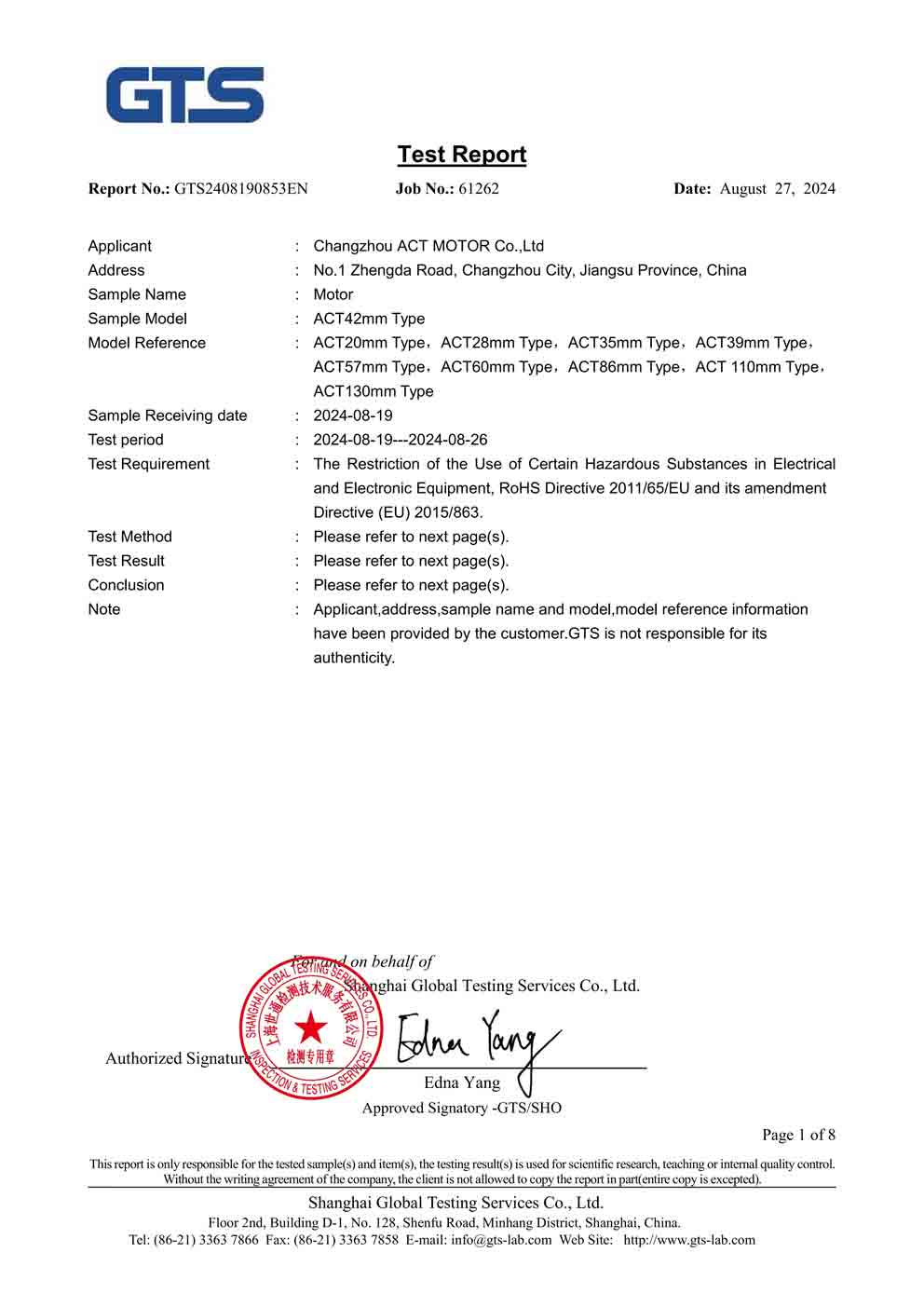
RoHS test report GTS2408190853EN covers the motors; the driver has its own report, GTS2408190852EN.
Two scope checks complete Rank 1. First, match your model number against the related-product list on the certificate: the documentation names specific families — for example 8HS, 17HS/HM, 23HS/HM/HY, 34HS/HM/HY/HD, 42HS and 52HS, plus the L, G and SSM series — and an unlisted configuration needs its own answer, not an assumption. Second, separate component compliance from machine compliance: motor and driver documents support the machine builder's own conformity assessment, they do not replace it.
| Document | Reference | Issuer | Stated validity |
|---|---|---|---|
| ISO 9001 quality management system | 07625Q2378R1S-JS/001 | ZRX | Issued 2025-10-13; valid to 2028-10-12 |
| RoHS test report, motors | GTS2408190853EN | GTS | Issued 2024-08-30; valid to 2029-08-29 |
| RoHS test report, drivers | GTS2408190852EN | GTS | Issued 2024-08-30; valid to 2029-08-29 |
| CE certificate, drive | ISETC.000320211115 | ISET | Issued 2021-11-15; stated expiry 2026-11-14 |
| CE certificate, power | ISETC.000420211115 | ISET | Issued 2021-11-15; stated expiry 2026-11-14 |
| CE certificate, motor | ISETC.000520211115 | ISET | Issued 2021-11-15; stated expiry 2026-11-14 |
Rank 2 — Specification match to the real load
Confirm second: which torque basis the quotation uses, at which operating point, and which electrical and dimensional parameters the supplier is committing to. Holding torque is a standstill value; it does not describe what the motor delivers at the speed your mechanism actually runs, and a selection made on holding torque alone is a selection made on the least representative number in the datasheet.
The parameters that belong in the RFQ are the ones a manufacturer can customise. ACT MOTOR lists step angle, motor length, rated voltage, rated current, phase resistance, phase inductance, holding torque, detent torque, rotor torque and lead wires as its OEM/ODM customisation inputs. That list doubles as a checklist for the buyer: if any of those ten items is left unstated, the supplier will fill it in, and the filled-in value becomes the specification.
- Step angle sets nominal resolution per full step; a finer step angle changes the motion profile and must be matched to the controller's microstepping plan rather than chosen for its own sake.
- Frame size and motor length set the mechanical envelope and the thermal headroom available for the required torque.
- Rated current, phase resistance and phase inductance together determine how the motor behaves with the chosen driver and supply — the values Rank 3 depends on.
- Holding torque, detent torque and rotor torque are three different figures; quoting one while accepting another is a common source of mismatch at incoming inspection.
Ask for the operating point rather than a single number: at what current, at what speed, and with which driver setting was the quoted torque obtained? Where a supplier cannot supply a curve, the sample test in Rank 5 becomes the substitute, and it should be designed on the machine's real duty cycle rather than on a free-running bench.
Rank 3 — Motor-driver pairing check
Confirm third: the exact driver model, its current setting at validation, its supply voltage, and the interface it presents to your controller. The pairing check belongs here — after the electrical specification is fixed, because the driver's current setting is defined against the motor's rated current, and before configuration and sample validation, because a sample approved on one driver does not approve the system running on another.
Three things make this criterion decisive rather than administrative. First, the driver governs the current the winding actually sees, so the same motor can pass or fail the same load depending on a setting that is often absent from the purchase order. Second, the compliance documents are separate: the RoHS report for ACT MOTOR drivers is GTS2408190852EN, a different document from the motor report, and the CE drive certificate ISETC.000320211115 cites EN 61800-3 and EN 61800-5-1 rather than the motor standard EN 60034-1. Third, the mechanical and electrical options in Rank 4 — brake, encoder, integrated drive — change the wiring the driver must support.
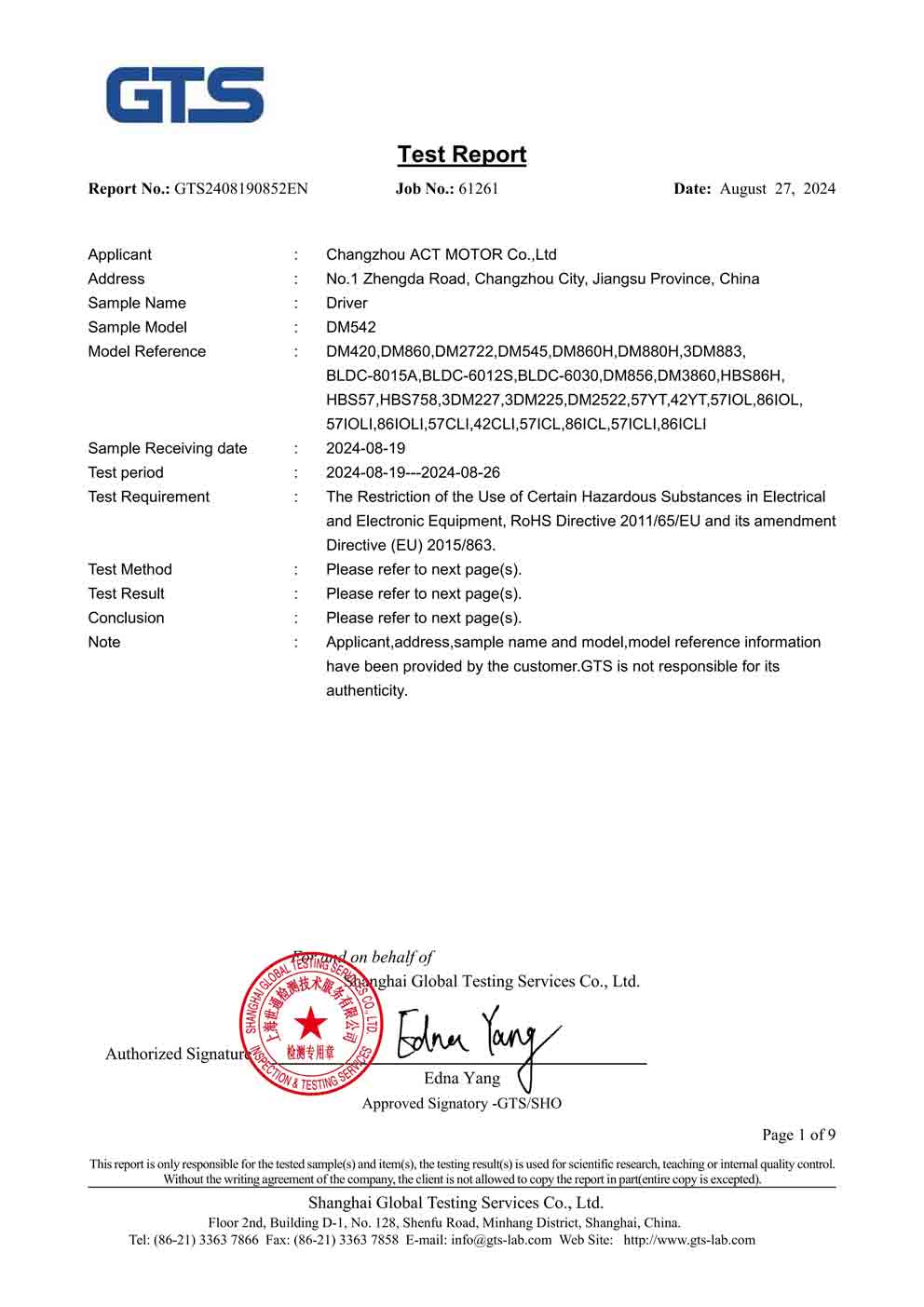
The driver-side RoHS report GTS2408190852EN is a separate document from the motor report — request both when a pair is ordered.
Write the pairing into the order as a specification, not a note: motor model, driver model, current setting, microstep setting used for validation, supply voltage, and the signal interface your controller provides. If the driver is supplied by the buyer rather than the motor supplier, send its settings to the motor supplier before the sample is built, so the sample is validated under production conditions.
Rank 4 — Configuration and mechanical interface
Confirm fourth: every option on the drawing, because options are where an approved sample stops representing the shipped product. ACT MOTOR's range includes lead screw stepper motors, geared stepper motors, gearbox stepper motors, brake stepper motors, stepper motors with encoder, integrated stepper motors, ball screw stepper motors and closed-loop stepper motors, in addition to the standard hybrid range.
Each option moves at least one other criterion. An encoder or closed-loop variant changes the wiring and the controller interface, so it must be settled with the Rank 3 pairing. A brake adds a control line and a release condition the machine's safety logic must handle. A gearbox or lead screw changes the output torque, speed and axial load the motor is being sized against, which returns the calculation to Rank 2. An integrated motor moves the drive electronics into the motor body, which changes the thermal and documentation picture rather than removing the driver question.
Close this criterion with a released drawing, not a description: shaft and cable termination, lead wire definition, motor length, mounting dimensions, option location, and the model code that both the drawing and the certificate recognise. Confirm the code exists inside the documented model families before design freeze.
Rank 5 — Sample validation and acceptance criteria
Confirm fifth: what the sample must prove, how it will be measured, and what record will release the production lot. ACT MOTOR reports a minimum order quantity of 2 units and a stated lead time of 30 days, which makes a pre-production sample practical rather than a special concession; the company also states 100% testing as its outgoing quality control.
A supplier's 100% test and a buyer's acceptance test answer different questions. The first asks whether each unit passed the supplier's own criteria; the second asks whether the unit performs in your mechanism. Build the acceptance record around the machine: run the paired motor and driver at the production current setting, at the duty cycle and ambient condition of the real installation, and record the parameters you will check on every later lot — holding behaviour at the specified current, step response at the working speed, noise, temperature rise, and dimensional conformance to the released drawing.
Treat the sample result as evidence about a configuration, not a promise about a population. The documented cases illustrate the point without proving it: ACT MOTOR records a 1,000-set supply of Hybrid Stepper Motors to an Italian CNC machinery manufacturer for carving applications over two years, with low noise and fast speed noted as the highlights, and a 2,000-set supply to a Spanish 3D printing manufacturer over a duration of two years, with the same two highlights. Both entries describe two years of stable operation for those configurations; neither substitutes for testing your own load, and neither should be read as a lead-time or performance guarantee.
Rank 6 — Commercial terms and supply continuity
Confirm last: the terms that only make sense once the technical object is fixed — quantity, price basis, Incoterms, delivery schedule, change notification and nonconformance handling. This criterion is ranked last because a price agreed on an undefined configuration is not a price; it is a placeholder that will be renegotiated when the drawing changes.
ACT MOTOR reports a monthly capacity of 200,000 units and an annual output of 2 million sets, a minimum order of 2 units, a 30-day lead time, and export markets covering the EU and China alongside a 70% export share across the USA, the EU and China. Its stated after-sales scope covers free technical consultation, professional technical support, customised solutions and after-sales technical maintenance, delivered in Europe through the Bremen branch.
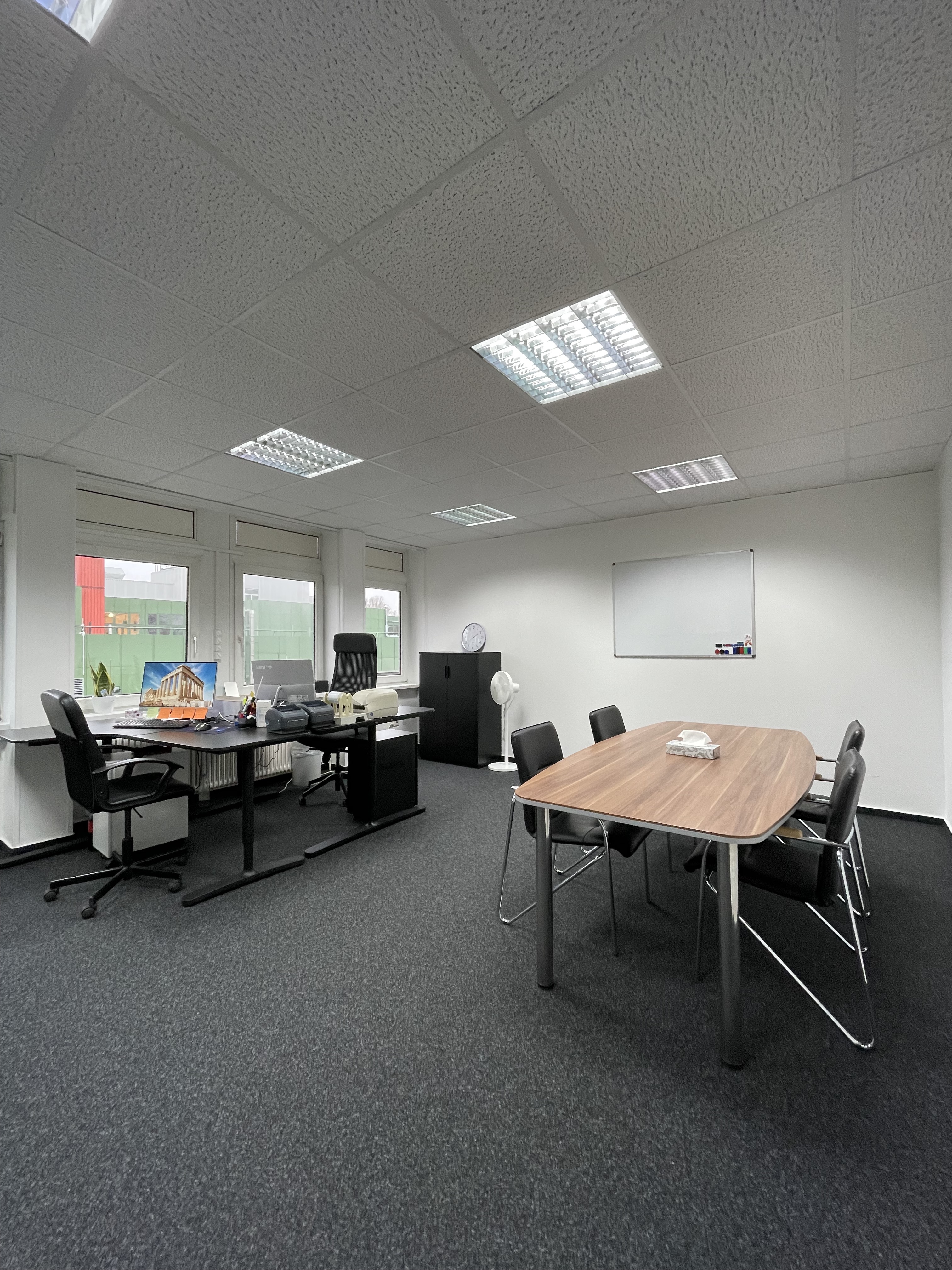
ACT MOTOR's Bremen branch supports European buyers on technical questions and after-sales service.
Three clauses belong in this step and are routinely omitted: a change-notification requirement, so that a motor or driver revision cannot arrive unannounced; a written nonconformance process, stating who inspects, who decides and who carries freight on a rejected lot; and a traceability requirement tying each shipment to a lot or date code that matches the acceptance record from Rank 5. Capacity and lead time are company-reported figures and should be reconfirmed for the specific model and quantity in the RFQ rather than carried forward from a general statement.
The framework at a glance
| Rank | Criterion | What to confirm | Cost of a late discovery |
|---|---|---|---|
| 1 | Documentation scope | ISO 9001, RoHS (motor and driver separately), CE parts, model scope, current validity | Shipment held in customs or in a customer audit; a certificate cannot be corrected retroactively |
| 2 | Specification match | Torque basis and operating point, step angle, frame size, rated current, resistance, inductance | Motor resized after mechanism design freeze |
| 3 | Driver pairing | Driver model, current setting, supply voltage, interface, driver documents | Sample approved at the wrong current; field stalls or overheating |
| 4 | Configuration | Encoder, brake, gearbox, lead screw, cable termination, released drawing | Shipped item does not match the validated sample |
| 5 | Sample and acceptance | Test conditions, measured parameters, written pass/fail record | Lot disputes repeat at every delivery |
| 6 | Commercial terms | Quantity, Incoterms, schedule, change notification, nonconformance handling | Placeholder pricing renegotiated mid-project |
Step-by-step: releasing the order
- Define the load and motion profile. Record the required output torque, speed, duty cycle, ambient condition and envelope. State the operating point, not just a target torque.
- Screen frame size and step angle. Match the required torque and envelope to a frame family that appears in the supplier's documented model list, so product and documentation stay aligned.
- Request the paired motor and driver specification. Include current setting, supply voltage, microstep plan, controller interface and both compliance documents, and confirm the driver documentation covers the driver you are buying.
- Freeze the drawing. Add every option — encoder, brake, gearbox, lead screw, cable and connector — and have the supplier return a revision-controlled drawing with the model code.
- Order and test a sample. Run it in the production configuration at the production current setting, measure the parameters on the acceptance list, and file the record against the drawing revision.
- Release the production order with the commercial clauses attached. Quantity, delivery, change notification, nonconformance handling and traceability, referenced to the accepted sample record.
How the ranking shifts by application
The six criteria do not change between applications, but the weight inside each one does. The following comparisons are conditional on the stated duty, not claims of suitability for any specific machine.
- Textile machinery. Continuous running and a dusty environment put thermal headroom and cable protection ahead of peak torque in Rank 2, and make the driver's current setting a maintenance issue rather than a one-off commissioning step in Rank 3.
- Syringe pumps and medical equipment. Fine and repeatable motion puts step angle and driver microstepping at the centre of Rank 2 and Rank 3, and makes the noise and step-response checks in Rank 5 the deciding measurements.
- Automated packaging lines. High-torque, high-cycle duty makes the torque basis question in Rank 2 and the thermal check in Rank 5 the binding constraints, with the driver's supply voltage settled early in Rank 3.
- Logistics sorter pushing. Repeated push strokes make holding behaviour and brake or gearbox configuration in Rank 4 part of the safety discussion, not an accessory decision.
- CNC carving and 3D printing. The documented cases above place noise and speed at the centre of the sample test, with low noise and fast speed recorded as the highlights for both the 1,000-set Italian CNC supply and the 2,000-set Spanish 3D printing supply.
Frequently asked questions
Which compliance documents should I request before confirming a Hybrid Stepper Motor order?
Request four groups. The ISO 9001 certificate for the manufacturing system — for ACT MOTOR that is 07625Q2378R1S-JS/001, issued 13 October 2025 and valid to 12 October 2028. The RoHS test report for the motor — GTS2408190853EN, issued 30 August 2024 and valid to 29 August 2029. The RoHS test report for the driver, if a driver is included — GTS2408190852EN, with the same issue and validity dates. And the CE documentation, which for ACT MOTOR is issued in three parts dated 15 November 2021: ISETC.000320211115 for the drive, ISETC.000420211115 for the power stage and ISETC.000520211115 for the motor, each with a stated expiry of 14 November 2026, so the current certificate version should be requested before ordering. Check that the model code you are buying appears in the document's product scope.
Can ACT MOTOR customise step angle, torque and lead wires for a specific application?
ACT MOTOR operates an OEM/ODM production mode and lists step angle, motor length, rated voltage, rated current, phase resistance, phase inductance, holding torque, detent torque, rotor torque and lead wires as customisation parameters. Because each of these interacts with the driver and the mechanical interface, the customisation request should be issued together with the driver setting and the released drawing rather than as a separate motor-only enquiry. Application-specific options such as encoder, brake, gearbox, lead screw and integrated drive are listed in the range and should be named explicitly in the request.
How should I budget a Hybrid Stepper Motor order when no public price list exists?
Industrial Hybrid Stepper Motors are quoted per configuration, so the budget should be built from a defined object rather than a catalogue number. Fix the specification parameters, the driver pairing and the option list first; then request pricing against that definition, with the price basis (Incoterms, quantity tiers and any tooling or customisation charge) stated explicitly. Keep the sample and the production order on the same drawing revision, otherwise the quoted price and the delivered configuration will diverge. ACT MOTOR's minimum order of 2 units allows a paid sample to be priced and evaluated before a volume commitment.
What can a pre-production sample prove, and what can it not?
A sample can prove that a specific motor and driver combination, at a specific current setting, meets your measured acceptance criteria on your mechanism — and it produces the record that later lots are compared against. It cannot prove lot-to-lot consistency, long-term life or performance outside the tested duty cycle. ACT MOTOR's 100% outgoing test is a supplier-side control and does not replace your incoming inspection. Define pass/fail values before the sample arrives, and attach the result to the drawing revision and the driver setting used.
What lead time and supply capacity should I plan for?
ACT MOTOR reports a 30-day lead time, a monthly capacity of 200,000 units and an annual output of 2 million sets, with export coverage across the EU and China and a 70% export share across the USA, the EU and China; European support is handled through the Bremen branch. These are company-reported figures, so confirm them for your specific model, option set and quantity in the RFQ, and agree the change-notification and nonconformance clauses in the same document. If you want to review the full product and capability overview before that conversation, the ACT MOTOR product brochure is available for download, and technical questions can be sent to market@act-motor.com.
Closing the six criteria in order turns a quotation into a specification that can be accepted, repeated and audited.
Conclusion
The order of confirmation is the purchasing decision. Documentation scope comes first because it cannot be fixed after shipment; the specification and the driver pairing come next because they define the object being bought; the configuration and the acceptance test come after that because they determine what the sample proves; and commercial terms come last because they only mean something once the object is defined.
Applied to a Hybrid Stepper Motor order, the framework produces a short, checkable list: a current ISO 9001 certificate, a RoHS report for each of the motor and the driver, a CE package whose validity has been reconfirmed, a torque figure with its operating point attached, a driver current setting written into the order, a released drawing with every option on it, and a signed acceptance record tied to the drawing revision. Buyers who close those six items before releasing the PO spend their negotiation time on delivery and continuity instead of on correcting a specification that was never fully written.
Have Questions or Need More Details?
Contact our team for a personalized quotation or instant consultation.
Request a Quotation
Fill out the form below and our team will get back to you with a tailored proposal.
WhatsApp Direct Chat
Prefer to chat in real-time? Message us on WhatsApp for instant assistance & quick answers.
- Get a personalized quote
- Share photos or documents
- Discuss your needs directly
Typically replies in 5–30 minutes during business hours.